
The 90-Minute Sunday Meal Prep System That Covers Every Lunch and Dinner — Without Eating the Same Thing Twice
Prep Time: 30 minutes | Cook Time: 60 minutes | Total Time: 90 minutes | Serves: 2 people × 5 days
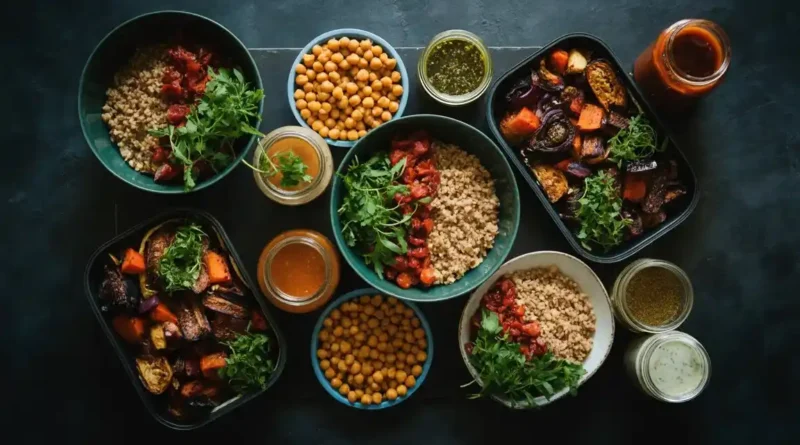
Here is what actually happens with most meal prep Sundays. You spend two hours cooking. You feel organized and virtuous. You stack your identical containers in the refrigerator with quiet satisfaction. And then Wednesday arrives and you are staring at the same brown rice and limp broccoli for the fourth consecutive time, eating it with the grim determination of someone completing a chore rather than enjoying a meal. That is not a recipe problem. That is a system problem. This post is not a collection of recipes. It is a 90-minute operating system for your kitchen — one that produces bold, hearty, genuinely varied lunches and dinners across five full days from a single Sunday session, without repeating the same flavor profile twice.
Kitchen Trial Note
The Sunday this system replaced everything else, I had just thrown away a full container of Tuesday’s prepped quinoa because it had turned into a dense, grey puck that no amount of reheating could rescue. I was frustrated enough to completely dismantle my approach. Instead of cooking full meals, I cooked components — a batch of toasted farro, two separate sauces, a tray of smoky roasted vegetables, and two proteins stored completely unsauced. The following Wednesday, I opened the refrigerator and assembled a harissa tahini grain bowl in under two minutes that tasted like something I had ordered rather than something I had survived. My husband looked up from his bowl mid-week and said, without any prompting, “this doesn’t taste like meal prep.” That was the confirmation I needed.
What Makes This a System, Not Just a Meal Prep
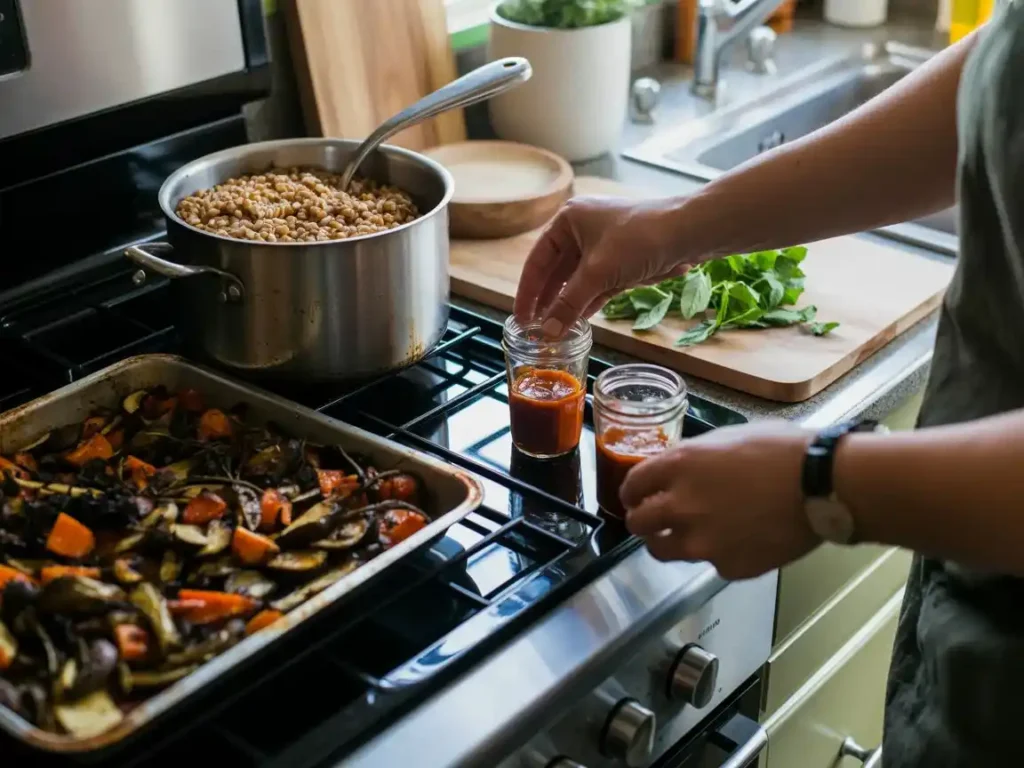
The difference between recipe-based meal prep and component-based meal prep is the difference between a fixed menu and a modular kitchen. Recipe-based prep locks you into five identical containers. Component-based prep gives you a grain base, two proteins, two sauces, a roasted vegetable matrix, and a topper system — all stored separately, all recombining into genuinely different bowls each day. The 90-minute session is an assembly architecture. You are not cooking Monday through Friday. You are building the raw materials that cook on demand in ninety seconds flat at your desk.
Why Most Meal Prep Goes Bland by Wednesday
The structural failure happens in three predictable places. First, single-sauce cooking — one dressing applied to everything on Sunday means every component absorbs the same flavor and then slowly loses even that by mid-week. Second, pre-assembled containers trap steam overnight, turning crisp vegetables soft and hearty grains into a compressed mass. Third, proteins stored in their own cooking liquid continue to cook passively in the refrigerator, drying out by Tuesday. The sauce-layering technique addresses all three failures simultaneously — and it begins before anything hits the pan.
The Sauce-Layering Technique — The Intellectual Core
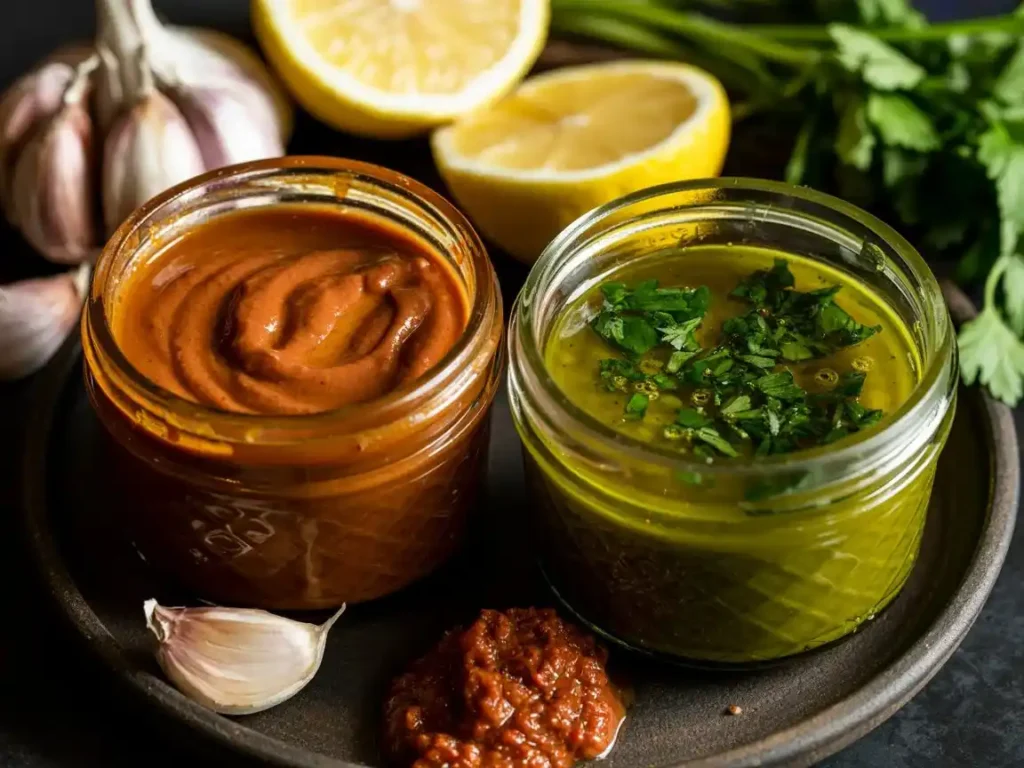
Build two distinct sauces at the very start of your session, before the oven preheats or the water boils. Sauce One is bold and smoky. Sauce Two is bright and acid-forward. These two sauces function as flavor transformation tools — the same farro and the same roasted sweet potato become a completely different meal depending on which sauce you apply and at what temperature. Fat carries flavor deep into grains and proteins. Acid refreshes dulled flavors on day four. Heat deepens and rounds. When you rotate between two sauce profiles across five days, your palate never registers repetition.
The 90-Minute Master Timeline
0:00 — Preheat oven to 210°C (425°F). Begin toasting farro in a dry pan over medium heat. 0:05 — Whisk Sauce One (smoky harissa tahini) and Sauce Two (herb vinaigrette). Refrigerate immediately. 0:15 — Add boiling water to farro. Reduce heat. Toss vegetables in olive oil and salt. Load onto two sheet pans. 0:20 — Slide vegetables into oven. Begin spiced lentils or chickpea roasting on a third tray. 0:45 — Remove chickpeas. Rotate vegetable trays. Prepare toppers (toast seeds, quick-pickle onions, soft-boil eggs). 0:70 — Pull all trays. Allow everything to cool fully before storage — this single step prevents condensation and sogginess. 0:90 — Portion and store by component. Session complete.
The Hearty Grain Base
Farro is the correct choice here. It holds its chewy, hearty texture across five refrigerated days without turning mushy — a failure point that eliminates quinoa and couscous from serious meal prep consideration. Toast the dry farro in a heavy-bottomed pan over medium heat for four minutes before adding water, stirring constantly until the grains deepen in color and release a warm, nutty aroma. This single technique adds a smoky, toasted depth that no amount of seasoning applied afterward can replicate.
Pro-Tip: Toast the farro until you can smell it — not just see the color change. The aromatic release signals that the starches on the outer hull have caramelized, locking in a nutty flavor that survives five days of refrigeration without fading.
The Dual-Protein Strategy
Prepare two proteins and store both completely unsauced. Protein One: smoky roasted chickpeas seasoned with smoked paprika, cumin, and olive oil, roasted at 210°C until deeply golden. Protein Two: sheet-pan chicken thighs seasoned simply with salt, pepper, and garlic, or hard-boiled eggs for a fully plant-forward week. Two proteins stored separately generate five distinct configurations — chickpeas with harissa tahini on Monday, chicken with herb vinaigrette on Tuesday, a combined protein bowl on Wednesday. The system, not the ingredient, creates the variety.
Pro-Tip: Store roasted chickpeas at room temperature in a paper-lined container rather than refrigerating them. Cold air kills their crispness within hours. Room temperature storage keeps them hearty and snappable for up to three days.
Sauce One — Smoky Harissa Tahini
Whisk together three tablespoons of tahini, one tablespoon of harissa paste, one grated roasted garlic clove, juice of one lemon, a pinch of smoked paprika, and two to three tablespoons of cold water added gradually until the sauce emulsifies into a thick, bold drizzle. Store in a small sealed jar. Apply cold over assembled bowls — the contrast between the warm grain base and the cold sauce creates a temperature dynamic that makes the bowl register as freshly made rather than reheated.
Pro-Tip: Roast the garlic clove directly on the vegetable tray rather than grating it raw. Roasted garlic emulsifies more smoothly into the tahini base and delivers a mellow, caramelized depth rather than the sharp bite that raw garlic leaves behind mid-week.
Sauce Two — Bright Herb Vinaigrette
Combine two tablespoons of red wine vinegar, one teaspoon of Dijon mustard, one small grated shallot, a generous handful of finely chopped flat-leaf parsley and chives, three tablespoons of extra-virgin olive oil, salt, and black pepper. Whisk until fully emulsified. This sauce functions as a palate reset — its acid-forward brightness cuts through the hearty grain base and makes Thursday’s bowl taste as alive as Monday’s.
The Roasted Vegetable Matrix
One root vegetable, one brassica, one allium — roasted together on separate trays at high heat. Sweet potato cubes for hearty caramelized sweetness. Broccoli florets for smoky, charred edges. Red onion wedges for bold, jammy depth. All three roast at 210°C simultaneously. The high heat is deliberate: it caramelizes the natural sugars, builds textural contrast between exterior and interior, and produces the deeply roasted flavor that low-heat roasting never achieves.
Pro-Tip: Never crowd the vegetable tray. Each piece needs direct oven contact with dry, circulating heat. A crowded tray steams rather than roasts, producing soft, pale vegetables that deteriorate even faster in the refrigerator.
The Topper System
Five toppers, prepared in the final five minutes of the session: toasted sunflower seeds, quick-pickled red onions (thin-sliced onion, red wine vinegar, pinch of sugar, ten minutes), a soft-boiled egg, fresh flat-leaf parsley, and a lemon wedge. Stored together in a small divided container. Rotating which toppers appear on each bowl creates genuine visual and textural variety — the single most underestimated tool in preventing meal prep fatigue.
The Storage Architecture
| Component | Container | Location |
|---|---|---|
| Farro | Large airtight container | Refrigerator |
| Roasted vegetables | Flat storage tray | Refrigerator |
| Chickpeas | Paper-lined box | Room temperature |
| Chicken / Eggs | Sealed airtight box | Refrigerator |
| Sauce One + Two | Small glass jars | Refrigerator door |
| Toppers | Small divided container | Refrigerator |
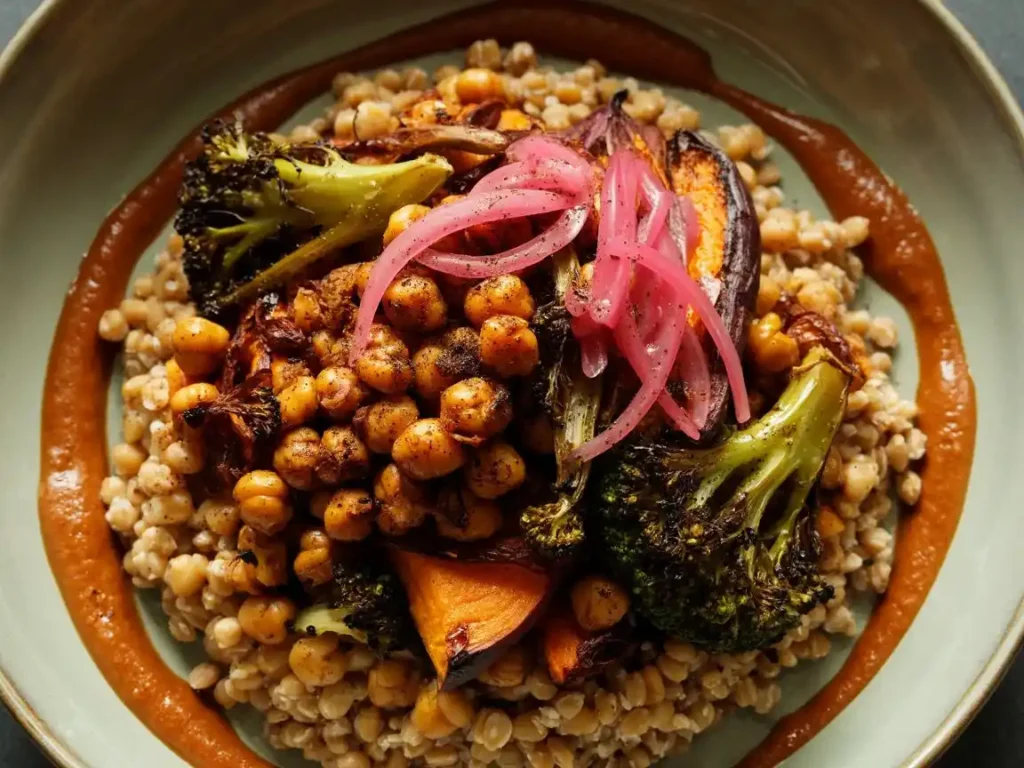
Never pre-assemble. Assemble each bowl at the moment of eating. The ninety-second assembly is the system’s most important rule.
The Weekly Meal Map
| Day | Base | Protein | Sauce | Toppers |
|---|---|---|---|---|
| Monday | Farro | Chickpeas | Harissa Tahini | Seeds, parsley |
| Tuesday | Farro | Chicken | Herb Vinaigrette | Pickled onion, lemon |
| Wednesday | Farro | Both | Harissa Tahini | Egg, seeds |
| Thursday | Farro | Chickpeas | Herb Vinaigrette | Pickled onion, herbs |
| Friday | Farro | Chicken | Both drizzled | Egg, lemon, parsley |
Full Ingredient Master List
Grains: 300g farro Proteins: 2 cans chickpeas, 4 chicken thighs or 6 eggs Vegetables: 2 medium sweet potatoes, 1 large head broccoli, 2 red onions Sauce One: Tahini, harissa paste, garlic, lemon, smoked paprika Sauce Two: Red wine vinegar, Dijon, shallot, parsley, chives, olive oil Toppers: Sunflower seeds, red onion, eggs, parsley, lemons Pantry: Olive oil, cumin, smoked paprika, salt, black pepper
Nutritional Callout (Per Assembled Bowl, Approximate)
Calories: 520 | Protein: 28g | Fat: 20g | Fiber: 12g | Carbs: 55g
Notable micronutrients: Beta-carotene from sweet potato, sulforaphane from roasted broccoli, folate from parsley and lentils, zinc from sunflower seeds.
Three System Variations
Fully Plant-Based: Replace chicken thighs with smoky spiced tempeh, pan-seared in olive oil and tamari until deeply caramelized on all four sides.
Lower-Carb: Swap the farro base for a full tray of shredded roasted cauliflower, high-heat roasted until the edges char and the interior turns creamy and yielding.
Higher-Protein: Add a third sauce — Greek yogurt thinned with lemon juice, fresh dill, and garlic — as a cooling, protein-rich drizzle on days three and five.
Why This Works — The Gap Logic
Three things separate this system from every generic healthy meal prep post on Pinterest. First, components stored separately never steam each other into mush. Second, two distinct sauce profiles rotate across five days, eliminating the flavor fatigue that makes Wednesday’s lunch feel like a sentence. Third, the topper system refreshes every bowl visually and texturally at the moment of assembly — so nothing ever looks or tastes like leftovers. This is the difference between meal prep that exhausts you by mid-week and a system you return to every single Sunday because it quietly, consistently, makes your entire week easier.
Save this system to your meal prep board and come back to it every Sunday. If you want a ready-made Day One lunch that fits perfectly into Monday’s bowl, the creamy clean eating salad is already waiting for you — built on the same component logic, ready in twenty minutes flat.


