Clean Eating Snacks: Creamy Satisfying 20g Protein Fix
It is 3pm. You are not hungry exactly — but something is pulling you toward the kitchen anyway. That low-grade, persistent craving that arrives every afternoon like clockwork is not a willpower problem. It is a protein problem. Specifically, most mid-afternoon snacks deliver 6 to 10 grams of protein at best, which is not enough to suppress ghrelin — the hunger hormone — for more than 90 minutes. These clean eating snacks solve that directly. Every recipe below hits 20 grams of protein using whole, real ingredients: Greek yogurt, peanut butter, eggs, cottage cheese, tuna. No protein powder. No ingredient lists longer than your arm. Just creamy, sweet, genuinely satisfying food that keeps cravings away until dinner, consistently, every single day.
Why Clean Eating Snacks With Real Protein Actually Keep You Full
Most snack marketing leans on fiber as the satiety hero. However, protein outperforms fiber on hunger suppression by a significant margin — and the mechanism is specific. When you consume protein above roughly 20 grams in a single sitting, you trigger leucine-stimulated muscle protein synthesis signals that simultaneously dampen appetite hormones. Additionally, protein carries a thermic effect of approximately 25 to 30 percent — meaning your body burns nearly a third of the calories from protein just digesting it. That metabolic cost extends the feeling of fullness well beyond what the calorie number alone would suggest.
Fiber-forward snacks — the rice cakes, the apple slices, the handful of almonds — are not bad choices. However, they tend to produce a satiety window of 60 to 90 minutes before cravings resurface. A 20-gram protein snack extends that window to three or four hours for most people. Consequently, the difference between a 10g and a 20g protein snack is not incremental. It is the difference between eating again at 5pm or not thinking about food until dinner.
The Difference Between 10g and 20g of Protein at Snack Time
A typical 10g protein snack looks like a handful of mixed nuts and an apple — a perfectly reasonable choice that still leaves most people reaching for something else within the hour. A 20g protein snack crosses the leucine threshold that researchers associate with meaningful satiety signaling. Specifically, leucine is the branched-chain amino acid that acts as the primary trigger for muscle protein synthesis pathways, and the activation threshold sits at approximately 2 to 3 grams of leucine — an amount reliably delivered by 20 grams of high-quality complete protein. Therefore, 20g is not an arbitrary marketing number. It is a physiological target with a measurable outcome.
What 20g of Protein Actually Looks Like as a Clean Eating Snack
This is the question Pin Title 3 asks, and it deserves a direct, visual answer. Twenty grams of protein from whole foods looks like this: three-quarters of a cup of full-fat Greek yogurt plus one tablespoon of natural peanut butter (21g). You could have half a cup of cottage cheese with two tablespoons of hemp seeds (20g); half a cup of shelled edamame alongside three tablespoons of hummus (20g); a small tin of tuna with five whole-grain crackers (22g); or two hard-boiled eggs with half an avocado and a pinch of everything bagel seasoning (approximately 16g combined).
None of these require protein powder, a blender, or more than five minutes. They are, by every reasonable definition, clean eating snacks — short ingredient lists, recognizable whole foods, no additives or stabilizers.
How to Read a Label for Clean Protein Sources (Without Overthinking It)
Three rules that take ten seconds at the shelf. First, the protein source should appear in the first three ingredients — if “milk protein isolate” is listed eighth, this is not a whole-food snack. Second, sugar per serving should sit under 8 grams — flavored Greek yogurts routinely carry 20 to 25 grams of added sugar, which disqualifies them from any honest clean eating framework. Third, the total ingredient count should be under ten. Specifically, a food with eleven or more ingredients is almost always hiding processing behind a “natural” label. These three filters eliminate the vast majority of misleading products without requiring nutritional expertise.
The Creamy Peanut Butter Cup Snack: A 5-Minute Clean Eating Recipe
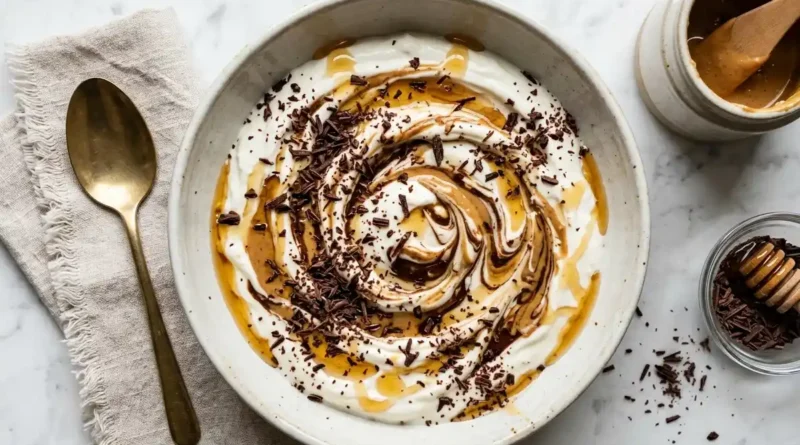
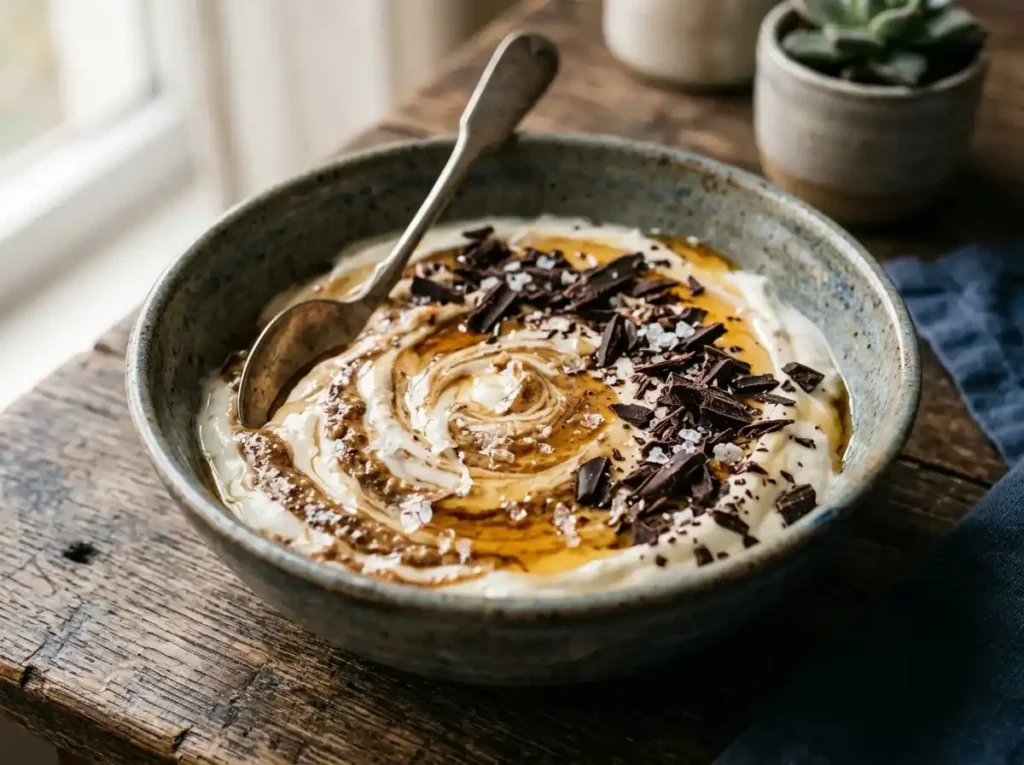
This is the recipe that answers all three Pin Titles simultaneously. It tastes like a peanut butter cup and takes five minutes. It delivers 21 grams of protein from two whole-food ingredients.
Ingredients:
- 3/4 cup full-fat Greek yogurt (18g protein)
- 1 tbsp natural peanut butter (4g protein)
- 1 tsp raw honey
- 1 tbsp dark chocolate shavings (70% cacao or higher)
- Pinch of flaky sea salt
Method:
Spoon the Greek yogurt into a wide, shallow bowl. Whisk briskly for 30 seconds — this aerates the yogurt and shifts the texture from dense to genuinely creamy. Drop the peanut butter in the center and use the back of a spoon to swirl it through without fully mixing; the marble effect delivers pockets of pure peanut richness. Drizzle honey across the surface, scatter the dark chocolate shavings, and finish with the flaky salt. The salt is not optional — it amplifies the sweetness of the honey and makes the entire bowl taste considerably more indulgent than the ingredients suggest.
Macros per serving: 21g protein · 9g fat · 14g carbs · approximately 220 calories · Cost: $1.20
Kitchen Trial Note:
I ate this exact snack every weekday afternoon for two weeks straight. By the end of week one, the 5pm chips-before-dinner habit had disappeared entirely — I simply was not hungry. One honest failure worth noting: I tested this with low-fat Greek yogurt on day three. The result was thin, watery, and vaguely sour — nothing like the creamy, satisfying texture that makes this work. Full-fat is non-negotiable. The fat content is precisely what gives the yogurt its body and makes the peanut butter swirl hold its shape rather than sinking. Do not compromise on this detail.
5 More Clean Eating Snacks That Hit 20g Protein Without Powder
Cottage Cheese Seed Bowl with Honey and Cinnamon
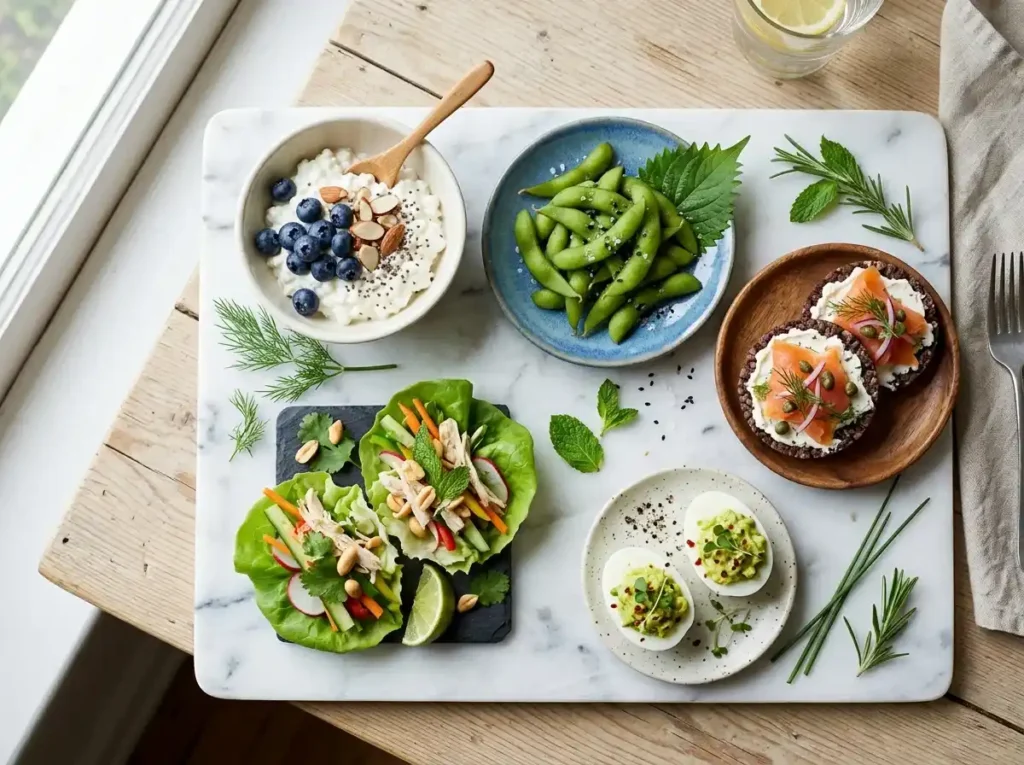
Spoon half a cup of full-fat cottage cheese into a bowl, top with two tablespoons of hemp seeds, a drizzle of honey, and a generous shake of cinnamon. The cottage cheese delivers a mild, creamy base with a slight savory edge that the honey and cinnamon pivot into something that reads as dessert. 19g protein · 4 minutes. Hemp seeds are the functional hero here — they contribute 10 grams of complete protein per three tablespoons and dissolve visually into the bowl without altering the texture.
Edamame and Hummus Protein Plate
Steam half a cup of frozen shelled edamame for three minutes, drain, and season with flaky salt and a squeeze of lemon. Serve alongside three tablespoons of hummus for dipping. The edamame delivers a satisfying firm pop with each bite — a textural contrast that makes this plate feel like a considered snack rather than a sad desk lunch. 20g protein · 3 minutes. The combination also provides all nine essential amino acids across the two sources, making it a complete protein pairing without any animal product.
Smoked Salmon and Cream Cheese Rice Cakes
Spread two rice cakes generously with full-fat cream cheese, layer with smoked salmon, finish with capers and a twist of black pepper. The cream cheese creates a rich, silky base that makes the rice cake relevant only as a delivery mechanism for the salmon. 18g protein · 5 minutes. Assemble these fresh — the rice cakes soften within 20 minutes of contact with the cream cheese, so pre-assembling them defeats the satisfying crunch entirely.
Hard-Boiled Eggs with Avocado and Everything Bagel Seasoning
Halve two hard-boiled eggs, fan them alongside half a ripe avocado sliced into thin wedges, and dust the entire plate with everything bagel seasoning. The yolk and avocado fat combine into a rich, buttery mouthfeel that makes this snack taste considerably more substantial than its preparation time implies. Approximately 16g protein · 6 minutes, assuming eggs are pre-boiled. Pro tip: boil a full dozen eggs every Sunday and store them unpeeled in the refrigerator for up to seven days — they become faster than any packaged snack at that point.
Tuna and White Bean Lettuce Wraps
Drain a small tin of tuna and mix with half a cup of rinsed white beans, a squeeze of lemon, one teaspoon of olive oil, and cracked black pepper. Spoon into two large butter lettuce leaves. The white beans bulk out the tuna with a creamy, mild texture that softens the brininess and adds slow-digesting carbohydrates alongside the protein. 22g protein · 5 minutes. This is the highest-protein option on this list and the most dinner-adjacent in flavor — ideal for a 4pm snack when dinner is still three hours away.
How to Build a 5-Day Clean Snack Rotation That Stops Afternoon Cravings
Assign each recipe a day and vary the protein source deliberately — dairy Monday, legume Tuesday, fish Wednesday, egg Thursday, dairy again Friday with a different preparation. This rotation serves two purposes. First, it prevents flavor fatigue, which is the primary reason healthy snack habits collapse by week two. Second, it maximizes amino acid variety across the week, which supports recovery and satiety more effectively than eating the same source daily. Consequently, the rotation is not just a convenience system — it is a nutritional strategy.
Prep-Ahead Tips: How to Have Clean Eating Snacks Ready in Under 10 Minutes Weekly
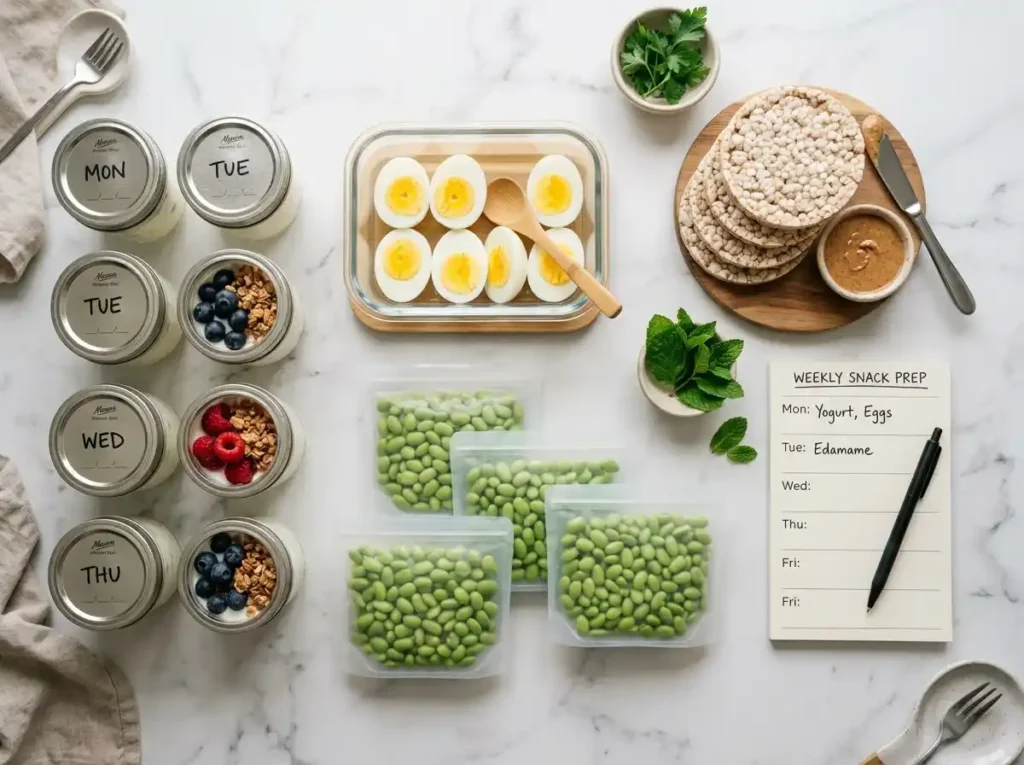
On Sunday, complete three tasks. Boil a dozen eggs using the cold-start method — place eggs in cold water, bring to a boil, cut the heat, cover for 11 minutes, then transfer immediately to an ice bath. This prevents the grey-green ring around the yolk that signals overcooking. Pre-portion Greek yogurt into four sealed mason jars; they hold perfectly for four days in the refrigerator. Additionally, steam and portion two cups of edamame into small containers — they reheat in 60 seconds or eat well cold. These three tasks take under 15 minutes total and eliminate every weekday decision about what the snack will be.
Ingredient Swaps for Dietary Restrictions and Clean Eating Goals
For dairy-free needs, replace full-fat Greek yogurt with coconut yogurt and add two tablespoons of hemp seeds to recover the lost protein. Replace cream cheese with cashew cream cheese — the texture holds well and the flavor is nearly identical. For vegan variations, swap smoked salmon for smoked carrot ribbons marinated in nori and liquid smoke, and replace hard-boiled eggs with marinated white beans seasoned with black salt for a faint eggy flavour. For lower-calorie adjustments, use 2% Greek yogurt instead of full-fat, accepting a reduction of roughly 3 grams of protein per serving, and use whipped cottage cheese in place of cream cheese for a lighter spread with a comparable protein count.
Frequently Asked Questions About Clean Eating Snacks With High Protein
Are clean eating snacks with 20g protein suitable for weight loss?
Yes — and specifically more effective than lower-protein alternatives. Protein’s thermic effect means your body burns more calories simply digesting it. Additionally, higher satiety reduces total daily calorie intake by eliminating secondary snacking between the planned snack and dinner. The net effect is a lower calorie day without conscious restriction.
Can I prep these clean eating snacks the night before?
Most of them, yes. The yogurt bowl, cottage cheese bowl, and edamame plate all hold well overnight in sealed containers. However, assemble the salmon rice cakes and lettuce wraps fresh — both components soften or wilt within a few hours of assembly and lose the textural contrast that makes them satisfying.
Is Greek yogurt actually a clean eating food?
Full-fat, plain Greek yogurt with two to four ingredients — milk and live cultures — qualifies cleanly. Flavored Greek yogurt with added sugar, pectin, and natural flavors does not. Consequently, the label-reading rules from the section above apply here directly. If the ingredient list exceeds five items, choose a different product.
What is the easiest high-protein clean eating snack with no cooking required?
The peanut butter cup yogurt bowl — five ingredients, no heat, five minutes. Alternatively, the edamame and hummus plate requires only microwaving frozen edamame for three minutes and demands no culinary skill whatsoever. Both qualify fully as clean eating snacks by every whole-food standard.
Common Mistakes People Make With High-Protein Clean Snacks
Three errors undermine results repeatedly. First, choosing flavored Greek yogurt — a single serving of most major brands carries 20 to 25 grams of added sugar, which triggers an insulin spike that accelerates rather than suppresses subsequent cravings. Second, substituting protein bars for clean eating snacks — most bars contain 30 or more ingredients, including syrups, isolates, and emulsifiers that disqualify them from any whole-food standard. Third, under-salting protein-heavy snacks. Salt amplifies perceived creaminess and sweetness, making whole-food snacks significantly more satisfying and less likely to leave you craving something more indulgent 20 minutes later. A pinch of flaky salt on the yogurt bowl, the eggs, or the cottage cheese transforms the eating experience every single time.
The 3pm craving does not require willpower to defeat. It requires 20 grams of protein delivered in a form that tastes creamy, sweet, and worth looking forward to. Start with the peanut butter cup yogurt bowl this afternoon. Build the five-day rotation this Sunday. Within a week, the vending machine, the chip bag, and the biscuit tin stop registering as options — not because you are restricting yourself, but because you are genuinely not hungry for them.