
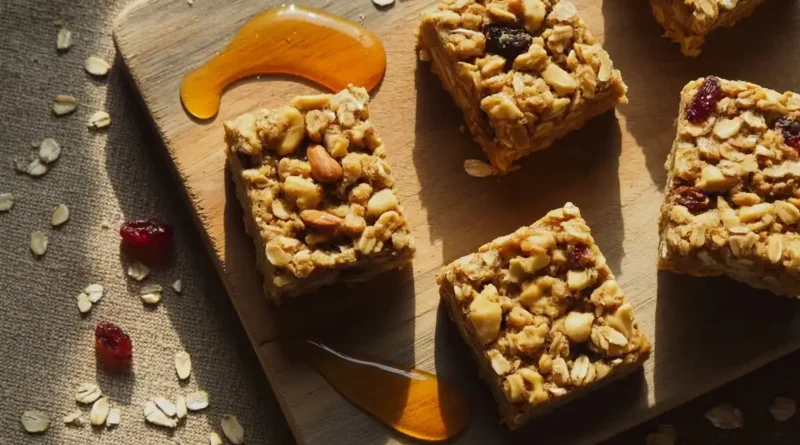
Breakfast Ideas for Kids Soft Chewy Oat Bars They Love
The first time I made these, I cut them too early, handed my seven-year-old a crumbling, lukewarm square, and watched her push the plate away without a single bite. That was the moment I realized even solid breakfast ideas for kids can fail completely on execution. Once I fixed the cooling time and dialed in the sweetness, she started asking for them by name on school mornings.
If your kids treat anything remotely wholesome like a punishment, these bars are the workaround. They taste like a treat. They hold together like one. And they come together in a single bowl the night before, which is the part parents actually care about.
Oat Bar Build Planner — Mix, Match, and Swap
| Ingredient | Role in the Bar | Kid-Approved Swap | What Changes |
|---|---|---|---|
| Rolled oats | Base structure, chew | Quick oats | Slightly softer, less chew |
| Honey or maple syrup | Sweetness + binding | Agave or brown rice syrup | Milder sweetness, same bind |
| Peanut butter | Fat, richness, hold | Sunflower seed butter | Nut-free, slightly earthier |
| Ripe banana | Natural sugar, moisture | Unsweetened applesauce | Less sweet, lighter texture |
| Chocolate chips | Kid buy-in | Raisins, dried mango | Fruit-forward, less sugar |
| Vanilla extract | Depth, warmth | Cinnamon pinch | Spiced profile instead |
| Salt (pinch) | Flavor balance | — | Never skip this one |
Use this table as your actual shopping reference. The swaps are not compromises — some of them, like sunflower seed butter with a ripe banana, taste genuinely better than the original depending on your kids’ preferences.
Why These Bars Work When Other Breakfast Ideas for Kids Don’t
Rolled oats are doing serious structural work here that most parents don’t think about. When oats absorb liquid from the honey, banana, and nut butter, they soften just enough to press into a cohesive slab — but the beta-glucan fiber inside each oat keeps the bar from collapsing into mush.
Beta-glucan is the same soluble fiber that nutritional research consistently links to slower glucose absorption, which means a more stable energy level through a school morning instead of a spike-and-crash. That matters when you’re trying to get a child through three hours of learning before lunch.
The binding here is also doing something clever. Honey crystallizes slightly as it cools. Peanut butter firms as the oils stabilize at room temperature. That combination — honey pulling tight, nut butter setting — is what gives you that soft, chewy snap rather than a dry crumble. It works without eggs, without flour, and without a mixer.
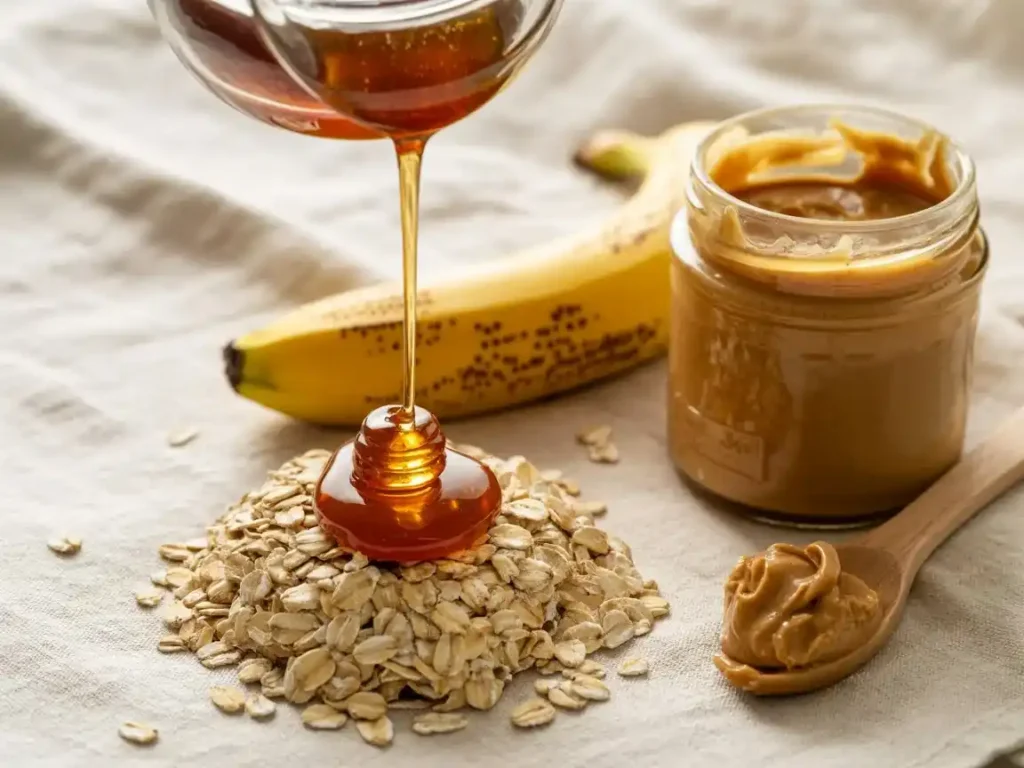
The sweet spot for these bars is not dessert-level sugar. It’s just enough that your kid doesn’t feel like they’re eating something responsible. Banana carries a lot of the sweetness load naturally, so you end up using far less added sugar than most granola bar recipes call for — and the flavor still reads as a treat, not a compromise.
How to Make Them in One Bowl
What you need:
- 2 cups rolled oats
- ⅓ cup honey or maple syrup
- ½ cup peanut butter (or sunflower seed butter)
- 1 ripe banana, mashed
- ½ cup chocolate chips or dried fruit
- 1 tsp vanilla extract
- Pinch of salt
Steps:
- Preheat your oven to 350°F (175°C). Line an 8×8-inch pan with parchment paper and leave overhang on two sides — you’ll use it to lift the whole slab out cleanly.
- Mash the banana in a large mixing bowl until it’s nearly liquid with just a few small lumps. Lumps are fine. Full chunks are not — they create soft spots that don’t bind properly.
- Add the peanut butter and honey directly into the banana. Stir until the mixture looks like a thick, uniform paste. It should pull away from the sides of the bowl slightly.
- Add the vanilla and salt. Stir again.
- Pour in the oats and fold everything together until every oat is coated. The mixture will feel dense and sticky — that’s exactly right. If it seems dry, your banana wasn’t quite ripe enough. Add one tablespoon of honey and fold again.
- Fold in the chocolate chips last so they don’t melt into the warm mixture.
- Transfer to your lined pan. Use wet hands or the back of a damp spatula to press the mixture firmly and evenly into every corner. Press harder than you think you need to. Compressed bars hold together. Loosely patted bars don’t.
- Bake for 20–22 minutes until the edges are visibly golden and the surface looks dry and set, not shiny.
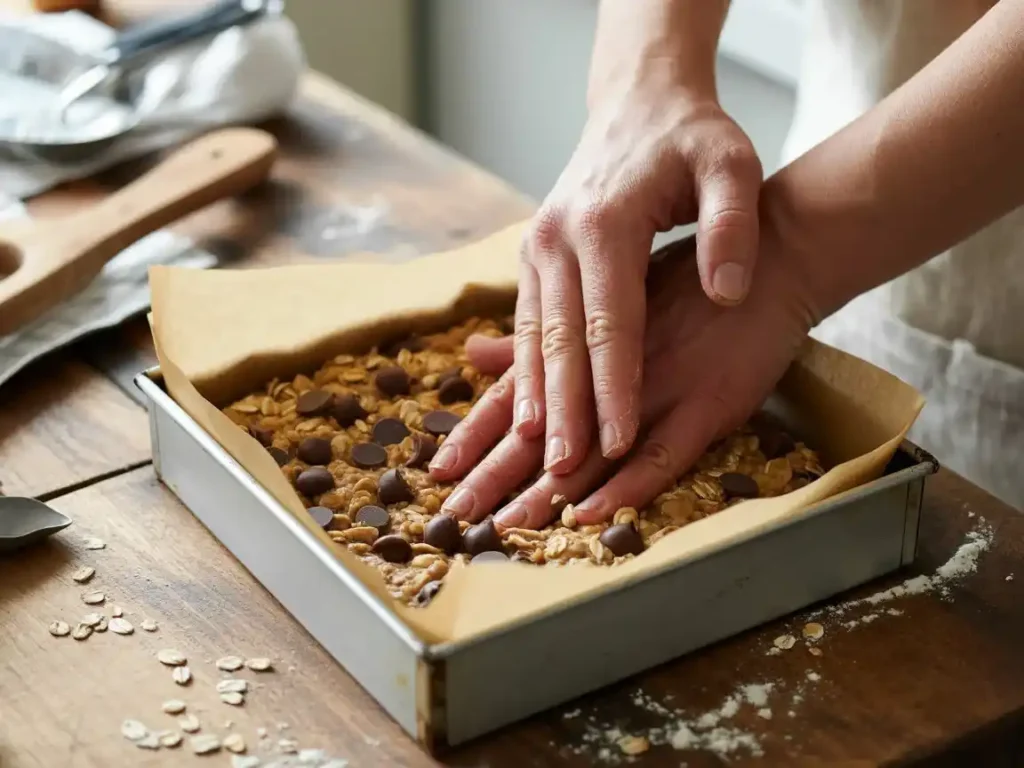
The surface should look matte when you pull it out. If it still has a wet sheen in the center, give it two more minutes. Pulling it early is the single most common reason bars crumble — the binding hasn’t finished setting.
Storage, Texture, and the One Thing Parents Always Get Wrong
Here’s where most people lose the batch. The bars need to cool completely in the pan — at least 45 minutes at room temperature — before you cut them. Not mostly cool. Fully cool.
Cutting into a warm bar breaks the bond that honey and nut butter formed during baking. You get rubble instead of rectangles. Set a timer, walk away, and do not touch them.
Once fully cooled, lift the whole slab using the parchment overhang and transfer to a cutting board. Cut with a sharp knife using a single downward press rather than a sawing motion. Sawing tears the texture apart along the oat seams.
Oats are a genuinely dense source of manganese, phosphorus, and B vitamins — and according to nutritional data from the USDA Food Data Central, a half-cup of dry rolled oats provides around 5 grams of protein and 4 grams of fiber, which makes these bars a more substantive morning option than most cold cereals.
Store cut bars in an airtight container at room temperature for up to four days. For longer storage, layer them between parchment sheets in a zip-top bag and freeze for up to two months. Pull one out the night before and it’s ready by morning — soft, chewy, and exactly the texture your kid expects.
Quick Allergy and Dietary Swaps
For nut-free households, sunflower seed butter is the cleanest direct swap and it binds almost identically to peanut butter. So For egg allergies, there’s nothing to worry about — this recipe contains none. For a vegan version, swap the honey for maple syrup and confirm your chocolate chips are dairy-free. The bars don’t change structurally with any of these adjustments, which is part of what makes them a dependable rotation recipe rather than a one-time novelty.
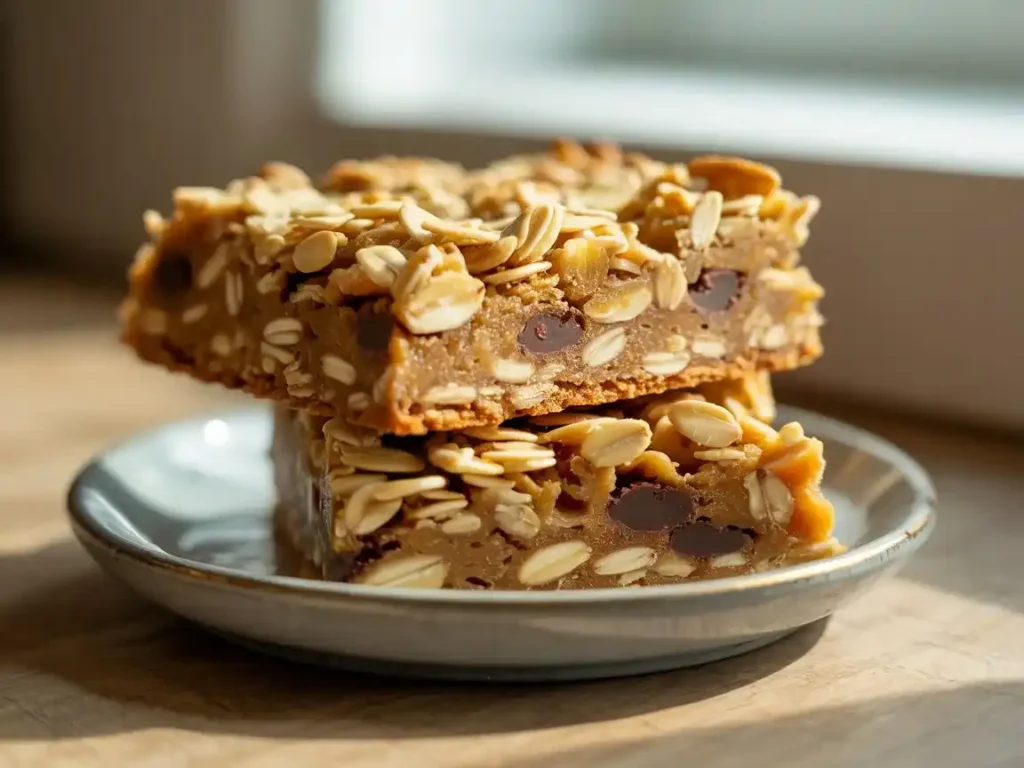
Every batch of these comes out slightly different depending on how ripe the banana is, which nut butter you use, and whether you go with chocolate chips or dried fruit — and that variability is actually what keeps kids coming back. The bar they had last Tuesday tasted a little different from the one in their lunch this Thursday, and somewhere in that variation they stop thinking of it as a healthy thing and start thinking of it as just a thing they like. That shift is quiet, gradual, and worth more than any ingredient swap you could make.

