
The Only Brownie Recipe You’ll Ever Need — Fudgy Center, Crinkle Top, Made in One Bowl
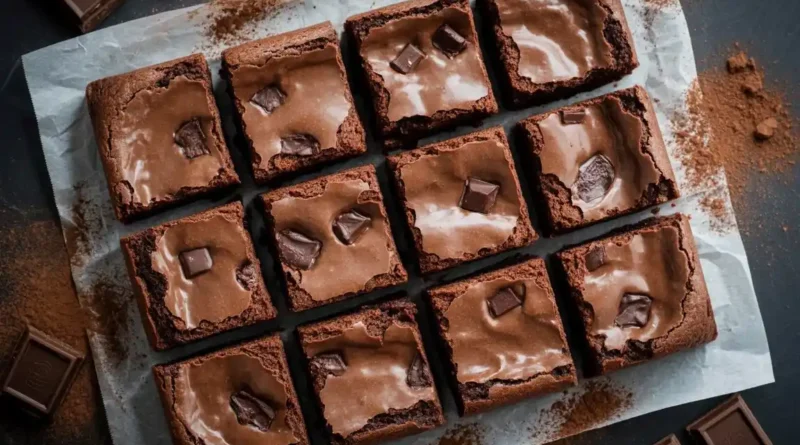
You know the brownie. The one where the knife slides through without resistance, the top carries that unmistakable glossy crinkle that shatters slightly under pressure, and the interior — dense, fudgy, smooth — holds its shape just long enough before yielding completely. That brownie exists. It is not a bakery secret or a lucky batch. It is a ratio problem, a technique problem, and today, it becomes a solved problem.
One bowl. Thirty minutes of active effort. The fudgiest, richest brownie you have ever pulled from your own oven.
Kitchen Trial Note
When I first started testing this recipe, I was convinced the difference between fudgy and cakey brownies was simply bake time. Pull them early — fudgy. Leave them longer — cakey. That logic lasted exactly two batches before it fell apart completely.
I made seven brownie batches over ten days, adjusting one variable per round: fat source, flour quantity, egg structure, sugar ratio, mixing duration, oven temperature, and pan size. Batch two was glossy on top but gummy and under-structured inside. Batch four had a beautiful crumb but a completely matte, flat surface — no crinkle anywhere. Batch six came agonizingly close but baked at 350°F produced edges that dried out before the center had fully set into that fudgy, smooth interior I was chasing.
Batch seven changed everything. Butter and oil combined. Extra egg yolk. A full ninety-second whisk of sugar and eggs before anything else entered the bowl. Dutch-process cocoa plus chopped dark chocolate. Baked at 325°F and pulled with moist crumbs still clinging to the tester.
The crinkle top crackled when I pressed it gently. The interior was rich, smooth, and dense without being raw. I cut eight squares. They were gone before the pan had fully cooled.
Why This Works: The Gap Everyone Skips
Search “brownie recipe” on Pinterest and the first twenty results share one silent flaw — they are written from box-mix logic. Standard ratios. Standard temperatures. Results that trend cakey, matte, and forgettable.
Here is what those recipes never explain: fudgy and cakey are not opposites on a baking-time spectrum. They are the direct result of fat-to-flour ratio, egg composition, and mixing technique — and every one of those variables is controllable before the pan ever touches the oven.
The fudgy brownie has more fat relative to flour, more sugar than feels comfortable, and an egg structure weighted toward yolks rather than whites. The crinkle top is not oven magic — it is the result of beating sugar and eggs long enough to partially dissolve the sugar crystals and create a thin, meringue-like surface layer that rises, sets, and cracks during baking. Skip that step and you get a flat, matte brownie regardless of every other correct decision you made.
Most recipes skip that step entirely.
The Science, Broken Down
Fat Source: Use Both Butter and Oil Butter contains water — approximately 16–18% by weight. That water converts to steam during baking and contributes to lift and a slightly cakey crumb. Oil is 100% fat with zero water content. It keeps the interior smooth, dense, and fudgy without any steam interference. Using butter alone delivers flavor but sacrifices fudginess. Using oil alone produces fudgy texture but flat, one-dimensional flavor. The professional solution: use both. Butter for richness and depth. Oil for the fudgy crumb that holds its shape when sliced.
Pro-Tip: Use a neutral oil — vegetable or refined coconut. Olive oil introduces a savory note that fights the chocolate rather than supporting it.
Chocolate: Layer It Dutch-process cocoa produces a deeper, smoother, less acidic chocolate flavor than natural cocoa and creates a denser crumb due to its lower starch content. Adding chopped dark chocolate (70% cacao or above) alongside the cocoa introduces actual cocoa butter into the batter — which is pure fat, directly contributing to that fudgy, smooth interior texture. This combination produces a richness that cocoa alone simply cannot replicate.
Pro-Tip: Melt the butter and chopped chocolate together in the same bowl. This tempers the chocolate gently and ensures it incorporates into the batter smoothly without seizing.
The Crinkle Top: It Starts With the Whisk Beat your eggs and sugar together for a full ninety seconds — not thirty, not until combined. Ninety seconds. This partially dissolves the sugar crystals and incorporates enough air to create a thin, unstable foam layer at the surface of the batter. During baking, this layer rises with the brownie, sets from the oven heat, and then collapses slightly as the center pulls inward — creating the signature crinkled, glossy top that separates a serious brownie from an ordinary one.
Pro-Tip: The batter should look noticeably paler and slightly thickened after the ninety-second whisk. If it still looks dark and liquid, keep going.
Flour: Use Less Than You Think Sixty grams — approximately half a cup — of all-purpose flour is all a fudgy brownie needs for structure. Every additional tablespoon of flour pushes the crumb further toward cakey. Once flour enters the bowl, fold with a spatula using slow, deliberate strokes. Overmixing develops gluten and tightens the crumb. Stop folding the moment no dry streaks remain visible.
The Full Recipe
Prep Time: 10 minutes | Bake Time: 28–30 minutes | Cool Time: 45 minutes | Yield: 16 squares
Ingredients
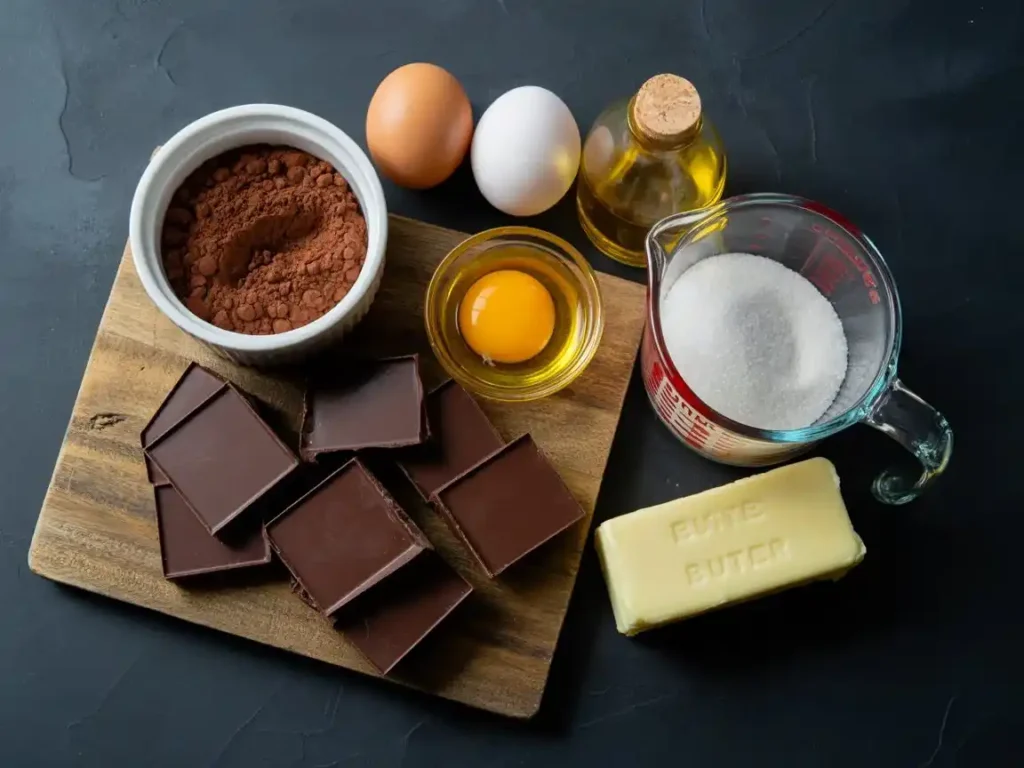
- 115g unsalted butter, cubed
- 100g dark chocolate (70% cacao), roughly chopped
- 60ml neutral vegetable oil
- 300g white granulated sugar
- 2 large eggs + 1 egg yolk
- 2 tsp pure vanilla extract
- 60g Dutch-process cocoa powder
- 60g all-purpose flour
- ½ tsp fine sea salt
Instructions
- Preheat oven to 325°F. Line an 8×8 inch baking pan with parchment paper, leaving a 2-inch overhang on two sides for easy removal.
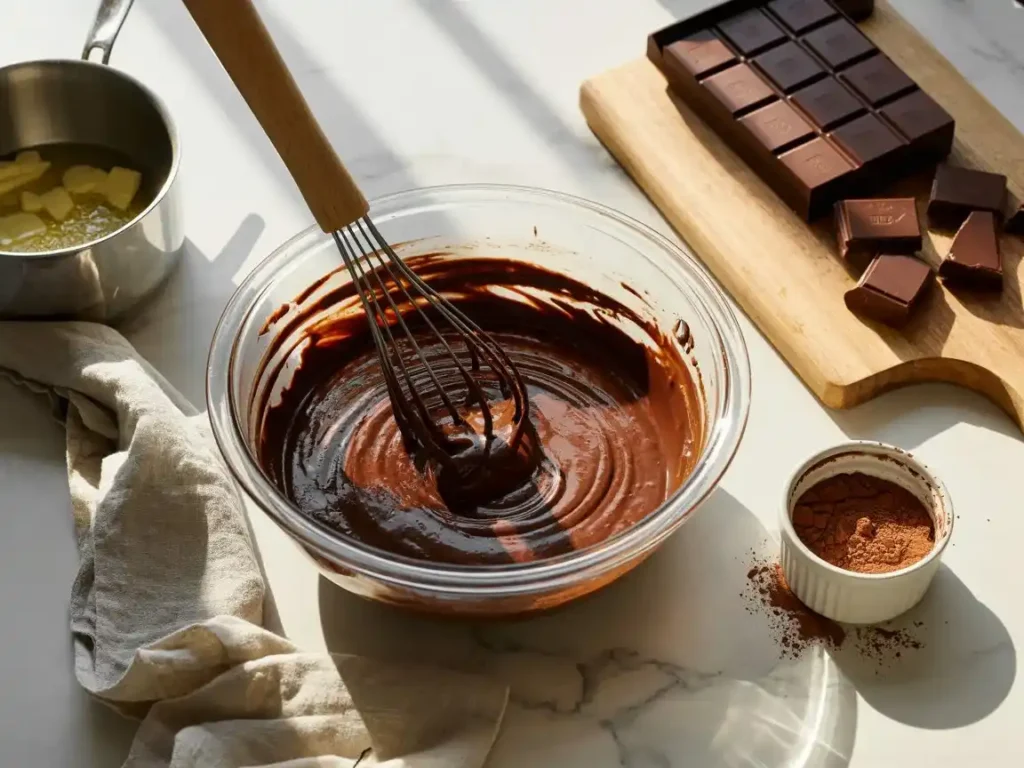
- In a large heatproof mixing bowl set over a saucepan of barely simmering water, melt butter and chopped dark chocolate together, stirring until completely smooth. Remove from heat and whisk in the vegetable oil. Allow to cool for 5 minutes. Pro-Tip: Do not let the bowl touch the simmering water. Gentle indirect heat keeps the chocolate from seizing or breaking.
- Add sugar to the chocolate mixture and whisk to combine. Add eggs, extra yolk, and vanilla. Whisk vigorously for a full ninety seconds until the batter looks slightly paler, thickened, and glossy. This step builds your crinkle top — do not rush it.
- Sift Dutch-process cocoa powder, flour, and salt directly into the bowl. Using a spatula, fold gently until no dry streaks remain. The batter will be thick, smooth, and deeply rich in color. Pro-Tip: Fold in a slow figure-eight motion rather than circular stirring. It incorporates the flour with fewer strokes — less gluten development, fudgier result.
- Pour batter into the prepared pan and smooth the top with the spatula. Tap the pan gently on the counter twice to release any air pockets.
- Bake on the center rack for 28–30 minutes. The top should appear set, glossy, and crinkled. Insert a toothpick into the center — moist crumbs clinging is correct. A clean toothpick means overbaked. Pro-Tip: Start checking at 26 minutes. Oven variance is real, and two minutes is the difference between fudgy and dry in a low-flour batter.
- Remove from oven and allow to cool in the pan for a full 45 minutes before lifting out using the parchment overhang. Slice with a sharp knife wiped clean between each cut.
Troubleshooting
| Problem | Likely Cause | Fix |
|---|---|---|
| Cakey crumb | Too much flour or over-mixing | Weigh flour at 60g; fold minimally after adding |
| Matte, flat top | Under-whisked egg and sugar stage | Whisk eggs and sugar for full 90 seconds |
| Gummy center | Under baked or cut too early | Bake to moist crumbs; cool full 45 minutes |
| Dry, tight edges | Oven too hot or overbaked | Drop to 325°F; pull at first moist crumb sign |
| Sunken middle | Pan too small or batter overfilled | Use 8×8 as specified; do not exceed ¾ pan depth |
Variations That Preserve the Formula
The base recipe holds its fudgy, rich structure across adaptations — as long as you do not increase flour or reduce fat. Stir one teaspoon of instant espresso powder into the melted chocolate for a mocha version that deepens every chocolate note without tasting like coffee. Swap twenty grams of flour for almond flour for a slightly denser, nuttier crumb. Swirl two tablespoons of tahini into the top of the batter before baking for a smooth, nutty contrast against the rich chocolate. Drop six raspberries across the surface and press them in gently — they sink slightly during baking and create pockets of sharp, jammy flavor inside the fudgy crumb.
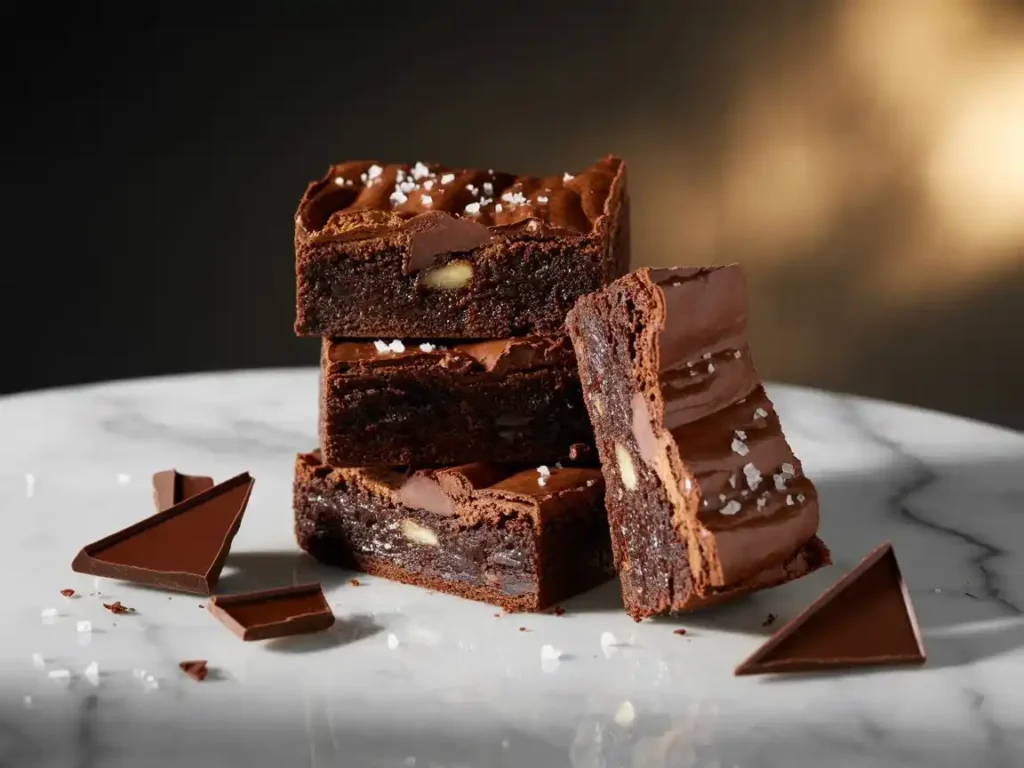
The crinkle top is not decoration. The one bowl is not a shortcut. Every decision in this recipe — the dual fat source, the extra yolk, the ninety-second whisk, the 325°F oven — exists because fudgy, rich, smooth brownies are built deliberately, not stumbled upon.


