The Healthy Salad Formula That’s Never Boring — 4 Components, Infinite Flavor Combinations
You’ve made the healthy salad before. You know exactly how it goes: a handful of greens, some cherry tomatoes, a drizzle of whatever dressing is left in the fridge door, and the quiet disappointment of eating something that feels more like an obligation than a meal. The problem was never your ingredients. The problem was the absence of a repeatable system — a formula that guarantees a crispy, vibrant, bold bowl every single time, regardless of what’s in your refrigerator. That formula exists. It has four components. And once you learn it, you will never eat a boring salad again.
The Boring Salad Diagnosis
Most salads fail for three structural reasons, and none of them have anything to do with the vegetables themselves. First: no textural contrast — every element has the same soft, yielding bite, so the bowl registers as flat before you’ve even tasted it. Second: under-seasoned greens — the base is dressed but never seasoned, which means the dressing sits on top of the leaves rather than becoming part of them. Third: dressing added too early — the moment salt contacts the cell walls of your greens, osmosis begins drawing moisture out, and within ten minutes your crispy, vibrant bowl has become a limp, watery plate. This is a systems problem, not a taste problem. Fix the system, fix the salad.
The 4-Component Formula
The architecture is straightforward. Every bowl you build from here forward follows this exact sequence:
Component 1 — A Bold Base. The foundation that holds dressing and provides volume.
Component 2 — A Crispy Element. The non-negotiable textural anchor that makes every bite interesting.
Component 3 — A Vibrant, Acid-Forward Dressing. Built to a precise ratio that emulsifies properly and coats every leaf. Component 4 — A Hearty Topper. The protein or substantial addition that pushes the bowl from side dish to dinner. Four components. That’s the entire system.
Kitchen Trial Note
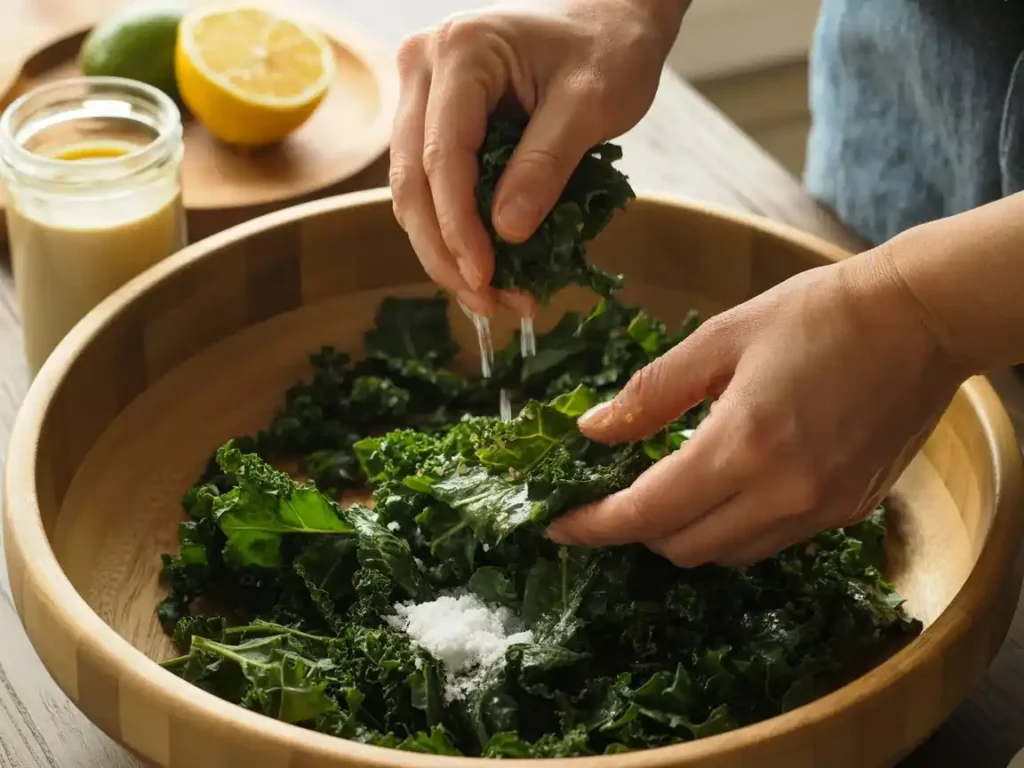
The week I stopped winging salads was a Tuesday in February when I had exactly one bunch of kale, a can of chickpeas, a lemon, and a jar of tahini. No plan, no recipe — just a decision to treat the bowl like I’d treat any other dish and season every layer independently. I massaged the kale with olive oil and flaky salt until it darkened and softened. I roasted the chickpeas at 220°C until they were genuinely crispy — not just warm, but snapping between my teeth. I emulsified the tahini with lemon juice and a thread of cold water until it turned pale and vibrant. The result was so far beyond any salad I’d made before that I ate it standing over the counter and then immediately made notes so I’d never forget the ratios. That bowl became the formula. Everything below came from that Tuesday.
Why This Works: The Restaurant Secret
Professional kitchens produce consistently bold, vibrant salads for one reason: they season every component in isolation before anything touches the bowl. The base gets massaged or lightly dressed. The protein is seasoned and rested. The crispy element is finished with a pinch of salt the moment it comes out of the oven. The dressing is built — not poured — using a Fat: Acid: Emulsifier ratio of 3:1:½ that forces proper emulsification rather than separation. When acid and fat are whisked together without an emulsifier, the mixture breaks within seconds. When you start with tahini, miso, or Dijon mustard as your emulsifier and stream the fat in slowly, the dressing becomes cohesive, coating, and vibrant enough to cling to every leaf without pooling at the bottom of the bowl. That’s the technique. That’s the gap between a restaurant salad and a home salad.
Building the Formula: Component by Component
Component 1 — The Bold Base Move past romaine. Massaged kale holds dressing without wilting and provides a chewy, substantial bite. Shaved Brussels sprouts add a nutty, crispy edge when thinly sliced. Arugula brings a peppery boldness that pairs with creamy dressings. Butter lettuce cups work as a vessel for heavier toppers. To prepare any base properly: add a small amount of your dressing, a pinch of salt, and work it into the leaves with your hands for 60 seconds. This seasons the base at the cellular level rather than coating the surface.
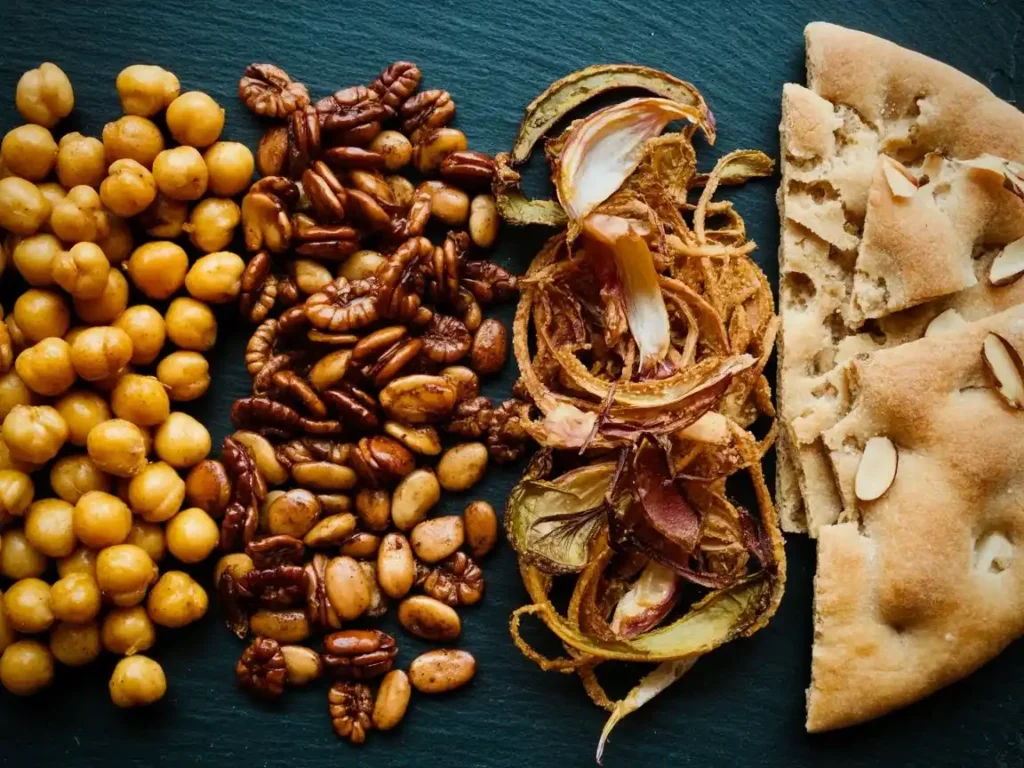
Component 2 — The Crispy Element This is the component most home cooks skip or undercook, and it’s the reason their salads feel flat. Crispy chickpeas roasted at 220°C for 30 minutes. Toasted pepitas in a dry skillet until they pop. Fried shallots finished with a touch of rice wine vinegar. Torn almond-flour flatbread crisped in olive oil. Each option adds a different textural register — some snap, some shatter, some crunch — but all of them serve the same purpose.
Pro-Tip: The crispy element goes into the bowl last, no more than five minutes before serving. It is the final step, every time, without exception.
Component 3 — The Vibrant Dressing The Fat: Acid: Emulsifier ratio: 3 parts fat (olive oil, sesame oil, avocado oil) to 1 part acid (lemon juice, apple cider vinegar, sherry vinegar) to ½ part emulsifier (tahini, white miso, Dijon mustard). Start with the emulsifier in the bowl. Add the acid and whisk to combine. Stream the fat in slowly while whisking continuously — this is the same principle as building a vinaigrette or a mayonnaise. The result emulsifies into a bold, coating dressing that doesn’t break or pool.
Four combinations that work immediately: lemon-tahini (olive oil, lemon, tahini), apple cider miso (sesame oil, ACV, white miso), harissa vinaigrette (olive oil, red wine vinegar, harissa paste), creamy avocado-herb (avocado oil, lime, blended fresh herbs).
Pro-Tip: Make dressing in double batches and store in a sealed jar for up to five days — shake vigorously before each use to re-emulsify.
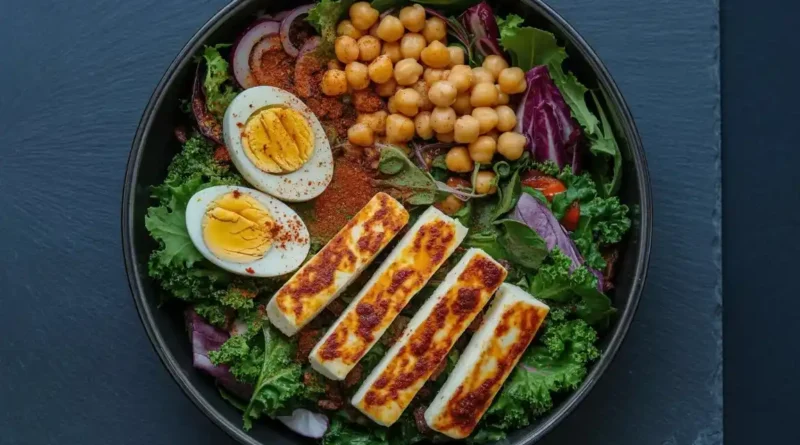
Component 4 — The Hearty Topper Za’atar-spiced chicken thighs, seared skin-side down until the fat renders and the skin turns bold and lacquered. Pan-fried halloumi pressed flat in a dry skillet until a golden, crispy crust forms on both faces. Soft-boiled eggs cooked precisely 6 minutes 30 seconds, shocked in ice water, and halved to reveal a jammy, vibrant yolk. Seared salmon finished with a squeeze of lemon directly in the pan. Each of these toppers transforms the bowl from a side into a dinner without changing a single other component.
Pro-Tip: Rest any protein for at least three minutes before slicing or placing — this preserves the juices that would otherwise bleed into and dilute your vibrant dressing.
Three Builds That Prove the Formula
Build 1 — The Weeknight Staple Massaged kale + crispy fried shallots + lemon-tahini emulsion + za’atar chicken thigh. Bold, nutty, deeply savory. Assembly to table: 20 minutes.
Build 2 — The Desk Lunch Shaved Brussels sprouts + toasted pepitas + apple cider miso dressing + jammy soft-boiled egg. Crispy, tangy, surprisingly filling. Assembly to table: 12 minutes.
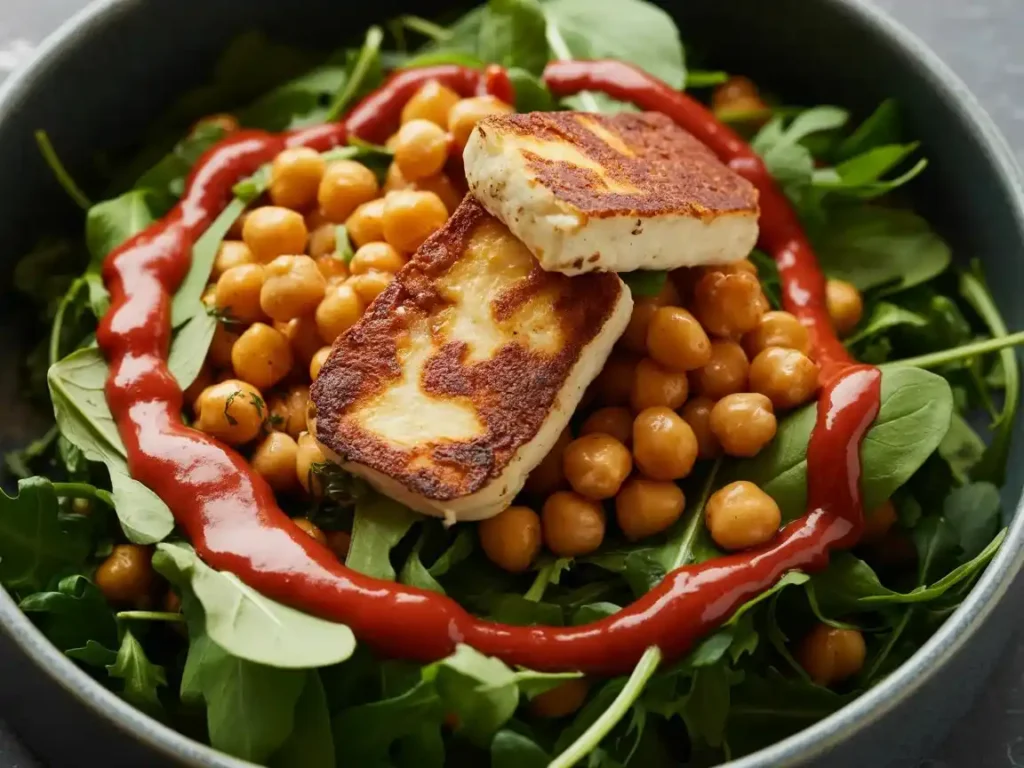
Build 3 — The Dinner-Party Bowl Arugula + crispy chickpeas + harissa vinaigrette + pan-seared halloumi. Vibrant, bold, visually striking. Assembly to table: 15 minutes.
Three completely different eating experiences. One formula.
The Never-the-Same-Bowl-Twice Matrix
| Component | Option A | Option B | Option C |
|---|---|---|---|
| Base | Massaged Kale | Shaved Brussels | Arugula |
| Crispy | Roasted Chickpeas | Toasted Pepitas | Fried Shallots |
| Dressing | Lemon-Tahini | Harissa Vinaigrette | ACV Miso |
| Topper | Za’atar Chicken | Halloumi | Jammy Egg |
Three options per slot across four components produces 81 distinct bowl combinations from one system. Save this matrix.
20-Minute Weekly Prep Logic
Prep on Sunday, eat differently every day. Massage and store your base dry in an airtight container — it holds for four days without dressing. Make a double batch of dressing and refrigerate in a sealed jar. Cook your protein in bulk and reheat gently before serving. The crispy element — and only the crispy element — gets made fresh each day. It takes four minutes and it is the detail that makes every bowl feel assembled rather than reheated.
Nutritional Reference
| Build | Calories (approx.) | Protein | Fiber | Time |
|---|---|---|---|---|
| Za’atar Chicken Kale | 480 kcal | 38g | 7g | 20 min |
| Miso Egg Brussels | 390 kcal | 18g | 9g | 12 min |
| Halloumi Harissa Arugula | 430 kcal | 22g | 6g | 15 min |
Three Questions Salad Skeptics Ask
Will this actually keep me full? Every build here pairs a fiber-dense base with a complete protein topper and fat-rich dressing — the combination triggers sustained satiety rather than the blood sugar spike-and-crash that refined carb lunches produce.
Can I make the dressing ahead? Yes — and you should. All four dressings above store for up to five days refrigerated. Re-emulsify by shaking or whisking before use.
What if I hate kale? Use shaved Brussels sprouts or arugula. The formula doesn’t depend on a single ingredient — it depends on the structure. Swap freely within each component slot.
The formula is now yours. Four components, one ratio, one timing rule — and from those constraints, every bowl you build will be crispy where it needs to be, vibrant in color and flavor, and bold enough to make you look forward to lunch. Save the substitution matrix, make the dressing in double batches, and add the crispy element last. That’s it. That’s the whole system.