
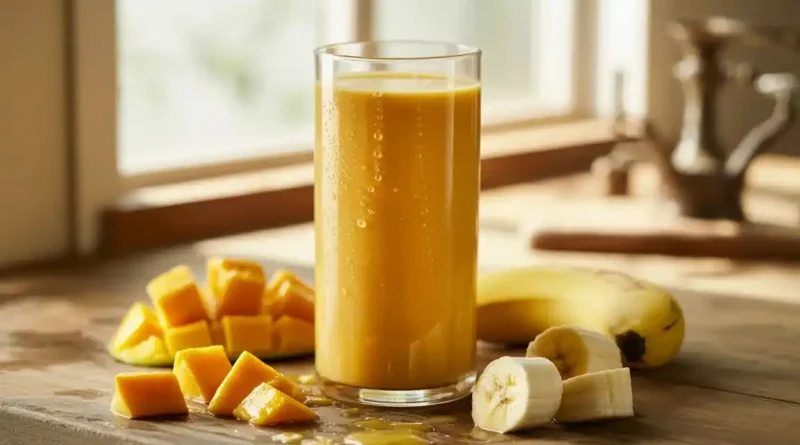
Healthy Drinks Recipes That Are Rich and Creamy (Without the $12 Price Tag)
You walk past a smoothie bar, glance at the menu, and see $11.50 for a 16-ounce cup. You keep walking. The frustrating part isn’t the price alone — it’s that you know the ingredients cost a fraction of that, and yet every time you’ve tried making healthy drinks recipes at home, something comes out thin, icy, or oddly flat. This recipe fixes that. And the total cost per serving lands under $1.80.
What Actually Makes a Smoothie Feel Rich and Creamy
Most people blame their blender. The blender is rarely the problem.
It’s Not the Expensive Add-Ins
Acai packets, collagen peptides, adaptogen mushroom powder — these ingredients are everywhere on “healthy drinks recipes” lists, and they cost a lot. What they mostly add is marketing. The actual texture and richness of a smoothie comes from a completely different set of variables, none of which require a specialty health food store.
The Three Texture Drivers: Fat, Fiber, and Temperature
Creaminess in a blended drink comes down to three things working together.
Fat creates the mouthfeel. A ripe banana, a spoonful of nut butter, half an avocado, or a tablespoon of full-fat coconut milk all do this effectively — and cheaply.
Fiber adds body. Frozen cauliflower florets (you won’t taste them), oats, or chia seeds thicken a smoothie without making it heavy. Research published through USDA FoodData Central consistently shows oats and chia seeds as among the most fiber-dense, affordable ingredients available in any grocery store.
Temperature is the most overlooked driver. Frozen fruit — not chilled, but actually frozen — gives you that thick, scoopable texture without added ice, which waters everything down. This distinction alone accounts for most home smoothie failures.
The Base Recipe — And What It Costs Per Serving
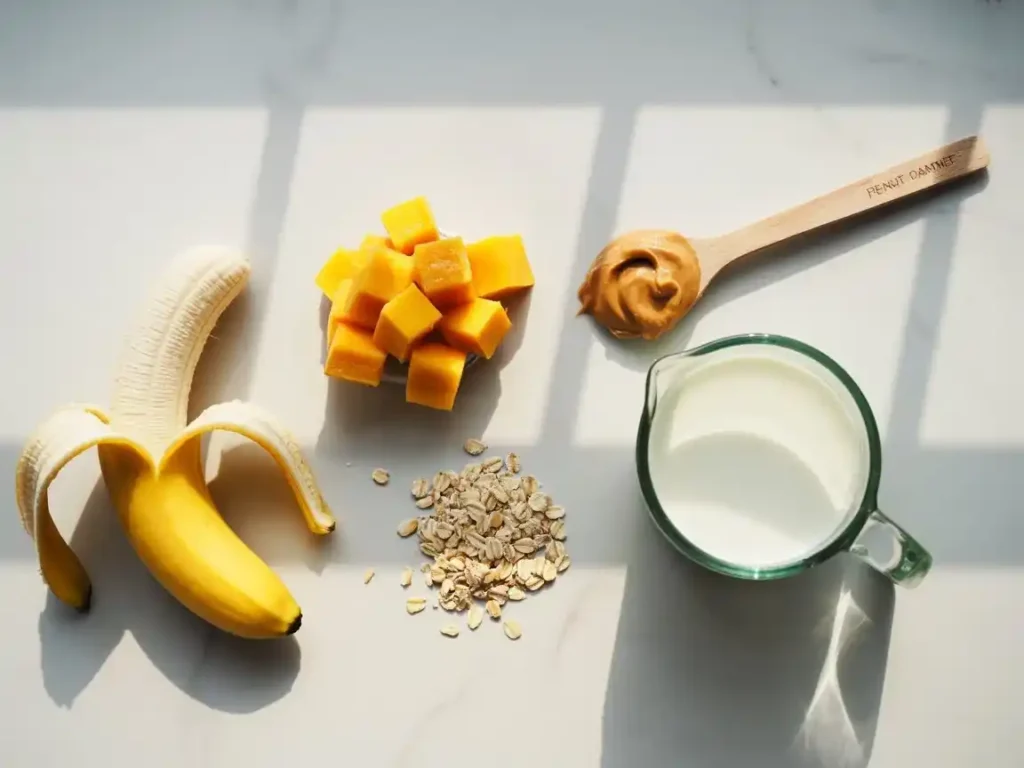
This recipe makes one generous 16-ounce serving — the same size you’d pay $11–$13 for at a juice bar.
| Ingredient | Juice Bar Version | Homemade Cost |
|---|---|---|
| Frozen mango (½ cup) | Included in $11.50 | ~$0.45 |
| Ripe banana | Included in $11.50 | ~$0.18 |
| Whole milk or oat milk (½ cup) | Included in $11.50 | ~$0.20–$0.35 |
| Peanut butter (1 tbsp) | Often an “add-on” at $1–$2 | ~$0.12 |
| Rolled oats (2 tbsp) | Rarely included | ~$0.06 |
| Total | $11.50–$13.50 | ~$1.01–$1.16 |
Ingredients
- 1 ripe banana, peeled and frozen overnight (this is the single biggest upgrade you can make)
- ½ cup frozen mango chunks
- ½ cup whole milk, oat milk, or unsweetened almond milk
- 1 tablespoon natural peanut butter or almond butter
- 2 tablespoons rolled oats
- Optional: ½ teaspoon vanilla extract, pinch of cinnamon
Method — Order Matters More Than You Think
Add liquid first, always. Pour your milk into the blender before anything else — this protects the blade and creates a vortex that pulls the frozen fruit down instead of jamming it.
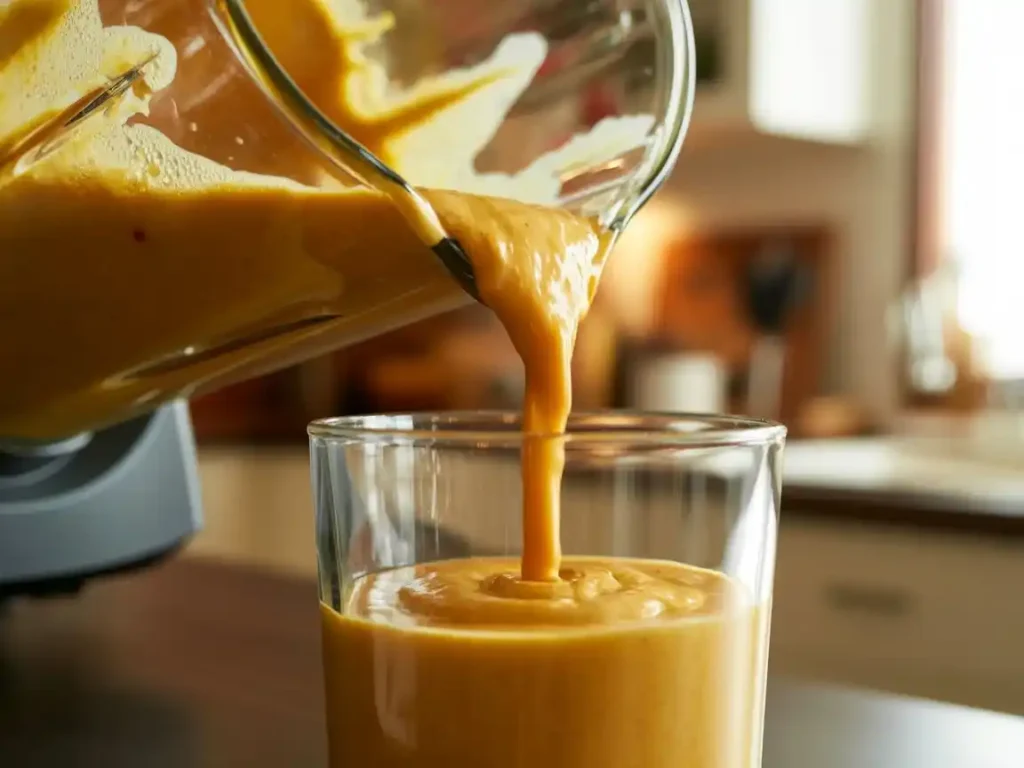
Add oats next, then nut butter, then the frozen fruit on top. Blend on high for 45–60 seconds without stopping. Stopping and restarting causes air pockets that leave chunks. One continuous blend, high speed, full minute.
Taste before you pour. If it’s too thick, add a tablespoon of milk and pulse once. If it tastes flat, a tiny pinch of salt lifts everything — this is the same reason salt goes into baked goods.
The “Specialty Ingredient” Swaps That Save the Most Money
Here’s where most healthy drinks recipes quietly break the budget — not through one big purchase, but through a slow accumulation of half-used specialty jars. I spent three months buying every “superfood” addition I could find before I ran a direct comparison test one Saturday morning: two identical smoothies, one with $22 worth of add-ins, one without. My husband, who has opinions about everything, couldn’t tell the difference in taste or how full he felt two hours later.
The swaps below are honest. A few involve a minor trade-off in nutrition, noted where it matters.
- Acai packets ($3–$5 each) → frozen blueberries ($0.40/serving): Near-identical antioxidant profile according to Serious Eats’ ingredient analysis, dramatically lower cost
- Collagen powder ($1.50–$2/serving) → Greek yogurt ($0.35/serving): Adds protein and creaminess; the collagen peptide research is thinner than its marketing suggests
- Coconut water ($2–$3/serving) → regular water + pinch of sea salt: Replaces electrolytes adequately for non-athletic use
- Maca powder ($1.80/serving) → cinnamon ($0.02/serving): Both add warmth and depth; skip maca unless you specifically want it
- Cashew milk ($0.60–$0.80/serving) → blended oat milk or whole milk: Essentially the same function in a smoothie; the creaminess difference is negligible once frozen fruit is involved
- Protein powder ($1.50–$2.50/serving) → 2 tablespoons of peanut butter + 3 tablespoons Greek yogurt: Hits roughly the same protein range at under $0.50 combined
How to Build Your Own Healthy Drinks Recipes on a Repeating Budget
The real cost savings don’t come from one good recipe — they come from a system you repeat without thinking.
The Frozen Fruit Rule
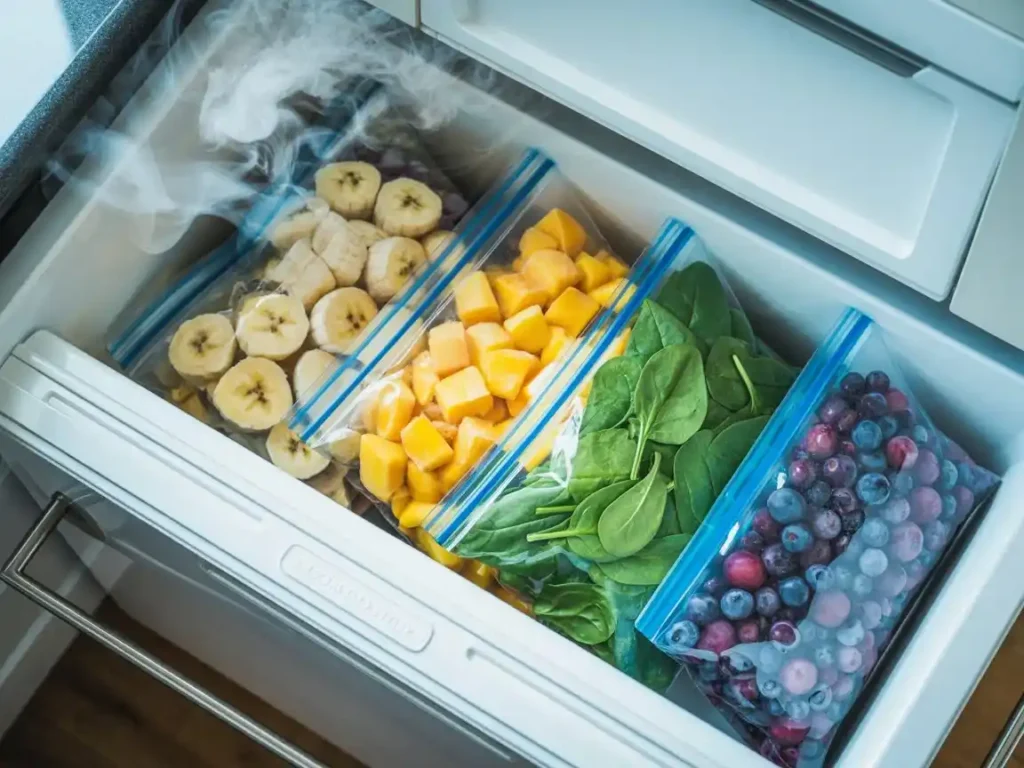
Buy fruit at peak ripeness when it’s cheapest, then freeze it yourself. Bananas going spotty? Peel, slice, freeze in a zip-lock bag. Mangoes on sale? Cube them, freeze flat on a tray, then bag them. Frozen fruit you prep yourself costs roughly 40–60% less than pre-frozen bags from the freezer aisle. King Arthur Baking’s guide to freezing fruits and dairy covers the technique well if you want specifics on preventing clumping.
The payoff is immediate: you always have the base of a rich, creamy smoothie ready, and nothing goes to waste.
What to Always Have on Hand
Keep these five things stocked and you can make a solid smoothie any day without a grocery run:
- Frozen bananas (your own, prepped in batches)
- One frozen fruit variety (rotate: mango, berries, peaches)
- Rolled oats
- Peanut butter or almond butter
- Your preferred milk (dairy or plant-based)
Everything else is optional. This core five handles texture, fat, fiber, and flavor without a single specialty purchase.
When It Actually Doesn’t Taste as Good — And How to Fix It
Even a solid recipe produces a bad result sometimes. Here are the three most common failures and what’s actually causing them.
Too icy and thin: You used ice instead of frozen fruit, or your banana wasn’t frozen. Fix: always freeze the banana. It adds fat and natural sugar that ice simply can’t replicate.
Tastes flat or bland: The fruit wasn’t ripe enough before freezing, or your nut butter is the no-stir, sweetened kind that doesn’t blend properly. Fix: use natural nut butter with no added sugar, and taste your fruit before freezing — underripe mango makes a noticeably dull smoothie.
Gritty texture: The oats didn’t have enough time to hydrate. Fix: add oats to the liquid and let them sit for two minutes before adding the frozen ingredients. Thirty seconds of soaking makes a real difference in the final texture.
The goal here isn’t a perfect smoothie every time — it’s understanding the two or three variables that matter, so you can troubleshoot in thirty seconds instead of throwing the whole thing out.
Which swap from the list are you most skeptical about — and which one are you trying first? The blueberry-for-acai trade is the one that surprised me most. Worth testing side by side if you have both in the freezer.
