
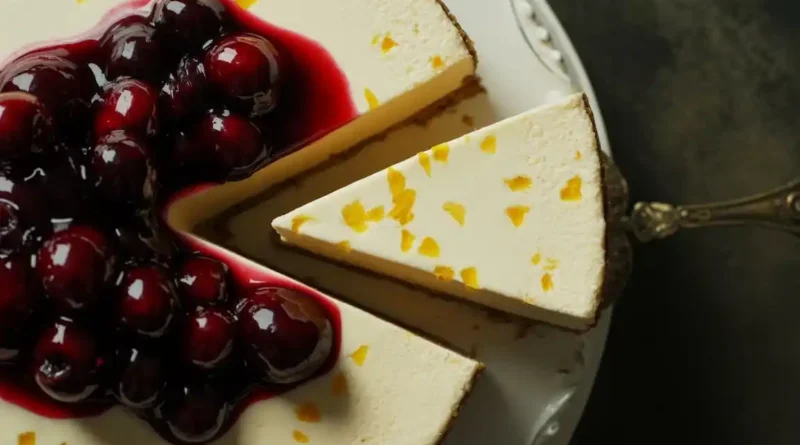
Fluffy Cheesecake That’s Actually Clean Eating — No One Believes Me When I Tell Them
The secret ingredient is full-fat Greek yoghurt. That is the answer to the question the Pinterest pin asked, and you deserve to have it immediately rather than buried twelve paragraphs down. Full-fat Greek yoghurt — not reduced-fat cream cheese, not silken tofu, not cashew cream — is what produces a cheesecake filling so fluffy it holds its slice cleanly, so rich it coats your palate the way full-fat versions do, and so genuinely clean that the entire formula contains zero refined sugar. The guests who tell you they do not eat dessert will finish their slice before anyone else at the table.
Kitchen Trial Note
When I first developed this formula, I served it at a Sunday lunch where one guest — a nutritionist, which felt like either perfect timing or a direct challenge — had already declined dessert before I brought it to the table. She was polite but firm. No refined sugar, she explained. I slid a slice toward her anyway and told her to read the ingredient list after. She read it before. Then she ate the slice. Then she asked whether the crust was really just oats and dates. It was. She had a second piece. That was the afternoon I understood that clean eating and genuine indulgence are not opposing forces — they are a sequencing problem, and this recipe solves the sequence correctly.
Why Healthy Cheesecake Usually Fails — And Why This One Does Not
Most clean-eating cheesecake recipes circulating on Pinterest share the same structural flaw: they replace full-fat dairy with low-fat alternatives in a formula that depends entirely on fat content for its texture. Low-fat cream cheese does not have enough fat to emulsify properly with eggs. The result is a dense, slightly rubbery filling that tastes aggressively of its substitutions — you can detect the compromise in every bite. The fix is not to find a better low-fat product. The fix is to stop treating fat as the problem. Full-fat Greek yoghurt contains the fat needed for a rich, creamy mouthfeel, while its naturally occurring whey protein structure traps air during mixing, generating genuine fluffiness without a single gram of heavy cream. The formula does not taste clean because it has been stripped down. It tastes indulgent because every ingredient is doing its job at full capacity.
Ingredient Breakdown — The Clean Formula
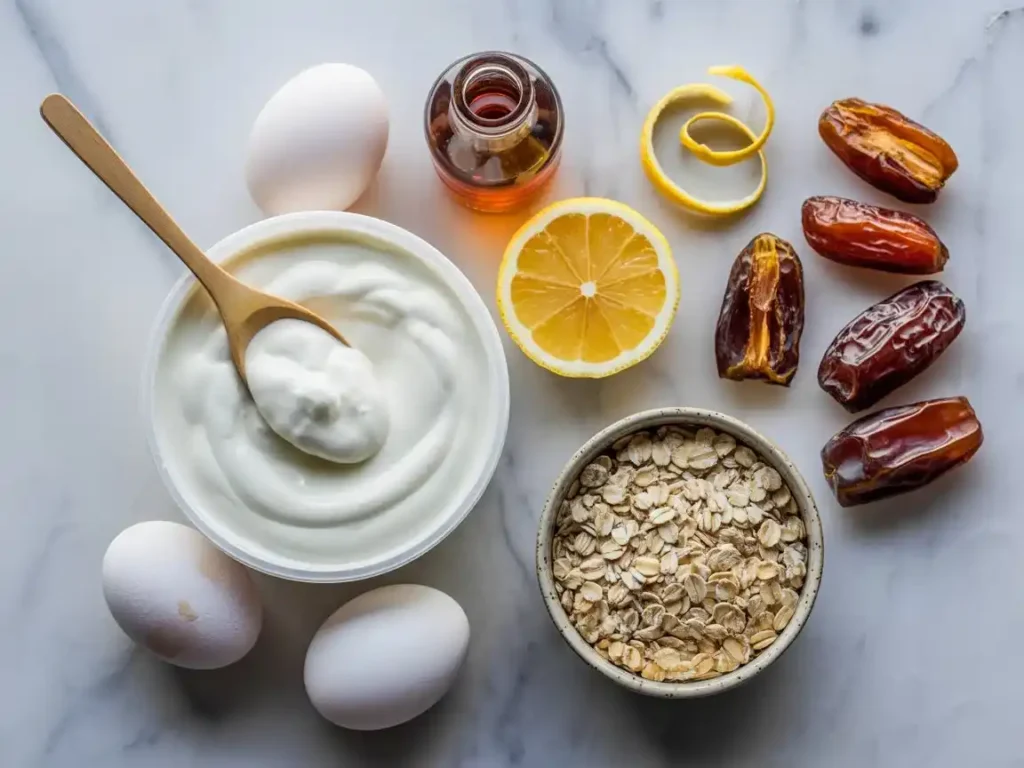
Full-Fat Greek Yoghurt (500g): The structural and textural foundation. Its whey protein network expands during mixing to trap air, creating the fluffy interior. Do not substitute with low-fat — the fat content is the mechanism, not an indulgence.
Eggs (3, room temperature): Room-temperature eggs emulsify into the yoghurt base without shocking the fat structure cold. The protein network they form during baking sets the fluffy air pockets permanently into the filling. Cold eggs tighten the batter prematurely and produce density.
Pure Maple Syrup (80ml): As a hygroscopic liquid sweetener, maple syrup integrates into the fat molecules of the yoghurt at a molecular level — it does not sit on top of the structure the way granulated sugar does. The result is a sweetness that reads as deep and complex rather than sharp, which is precisely why this cheesecake tastes richer than its ingredient list suggests.
Lemon Zest (1 full lemon): Zest contains essential oils that cut through the natural tang of Greek yoghurt and lift the overall flavor profile. It is not optional decoration — it is the balance mechanism.
Oat and Medjool Date Crust (100g rolled oats, 8 dates): Blended together, the natural sugars and oils in medjool dates bind the oats into a press-able crust without any added butter. The flavor is nuttier and more complex than a graham cracker base, and it holds its structure cleanly under a cold, set filling.
Step-by-Step Instructions
Step 1 — Build and Press the Crust Blend rolled oats and pitted medjool dates in a food processor until the mixture resembles a sticky, coarse crumble that holds together when pressed between two fingers. Press firmly into the base of a lined 20cm springform pan. Pro-Tip: Use the flat base of a drinking glass to press the crust evenly — it compacts the mixture more uniformly than fingertips and eliminates thin patches that crumble when you slice.
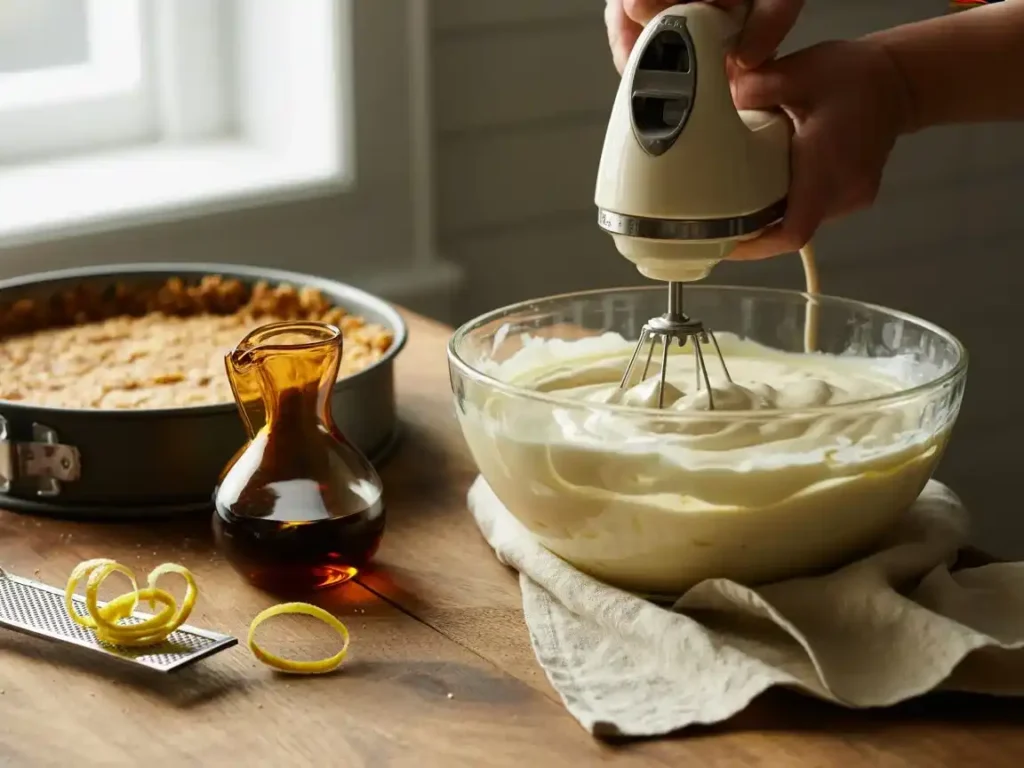
Step 2 — Build the Batter in the Correct Sequence Add Greek yoghurt to a large bowl and beat on medium speed with a hand mixer for 60 seconds to loosen the structure. Add maple syrup and beat for a further 30 seconds until fully incorporated. Add lemon zest and vanilla extract, then add eggs one at a time, beating briefly after each addition. Pro-Tip: Never add all three eggs simultaneously — adding them one at a time allows each egg’s lecithin to emulsify fully into the fat before the next egg introduces more protein, keeping the batter smooth and airy rather than scrambled.
Step 3 — Prepare the Water Bath Place the filled springform pan into a larger roasting tray and pour boiling water into the tray until it reaches halfway up the outside of the springform. Pro-Tip: Wrap the outside base of the springform pan tightly in two layers of aluminum foil before adding water — this prevents any seepage into the crust, which would make the base soggy and structurally weak.
Step 4 — Bake at 325°F (163°C) for 40–45 Minutes Bake with the water bath in place. At 40 minutes, check for the correct visual cue: the outer two-thirds of the filling should be fully set, with a 2-inch jiggle radius at the center when the tray is gently moved. Pro-Tip: A fully set center at this stage means the cheesecake is already overbaked — the residual heat from the water bath will continue cooking the center during the cooling phase, so pulling it with a jiggle is correct, not alarming.
Step 5 — The Two-Stage Cool Turn the oven off. Leave the cheesecake inside with the oven door cracked open for 30 minutes. Then transfer to a wire rack at room temperature for one hour before refrigerating for a minimum of four hours. Pro-Tip: The two-stage cool prevents the sudden temperature drop that causes the center to sink and the surface to crack. It is the single detail that separates a bakery-finish result from a home-kitchen result — and most recipes skip it entirely.
Texture Troubleshooting
| Result | Likely Cause | Fix |
|---|---|---|
| Dense, not fluffy | Low-fat yoghurt used or over-mixed | Use full-fat, hand mixer on medium only |
| Cracked top | Cooled too quickly | Always use two-stage cool method |
| Soggy crust | Springform not foil-wrapped | Double-wrap base before water bath |
| Too tangy | Lemon zest omitted | Zest is the balance mechanism — include it |
Storage and Serving Temperature
Refrigerate in the springform pan, covered loosely with parchment, for up to four days. Remove from the refrigerator ten minutes before serving — cold enough to hold a clean slice, warm enough for the full creamy, fluffy texture to release on the palate. Unlike room-temperature desserts, the yoghurt protein structure in this cheesecake requires refrigeration to maintain its set between servings.
Nutritional Call-Out (Per Slice, Based on 10 Slices)
Approximately 162 calories | 5g fat | 14g sugar (all naturally occurring) | 9g protein. Compared to a standard full-fat cheesecake averaging 380 calories and 28g sugar per slice, this formula delivers a genuinely rich, fluffy result at less than half the caloric load — with more than four times the protein per slice from the Greek yoghurt base.
The Finished Slice
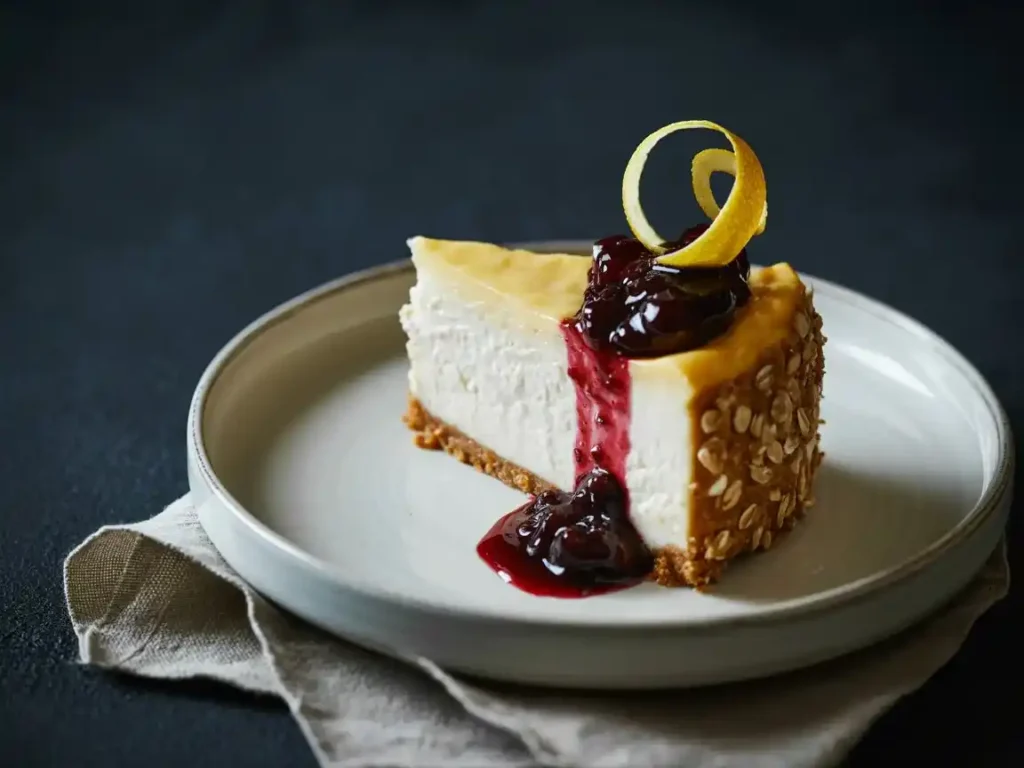
Which topping are you going with — the berry compote, whipped coconut cream, or the tahini and honey drizzle? Save this pin for the next time someone at your table tells you they do not eat dessert. They will.


