
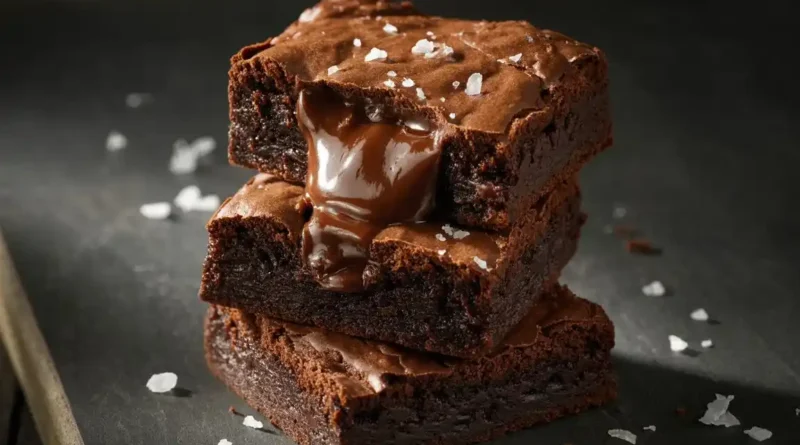
3-Ingredient Brownies With a Creamy Fudge Centre — Guests Always Ask for the Recipe
Yes — three ingredients. That is the complete list. No flour, no leavening agents, no vanilla, no salt measured into a separate bowl. Just dark chocolate, eggs, and sugar, combined with a specific technique that controls exactly how the heat moves through the batter. The result is a brownie with edges that snap cleanly when you cut them and a centre so creamy and dense it pulls like warm caramel off the knife. People will assume you drove to a bakery. You did not. You spent twenty-two minutes in your own kitchen.
Kitchen Trial Note
When I first made these, I was skeptical in the way anyone is skeptical of a formula that sounds too edited down to be credible. I brought a tray to a friend’s dinner — the kind of dinner where someone always brings something from the patisserie two streets over — and within ten minutes a guest pulled me aside to ask which bakery I had used. I told her. She did not believe me until I showed her the three-item grocery receipt still in my coat pocket. That was the moment I understood that restraint in a brownie recipe is not a limitation. It is the actual technique.
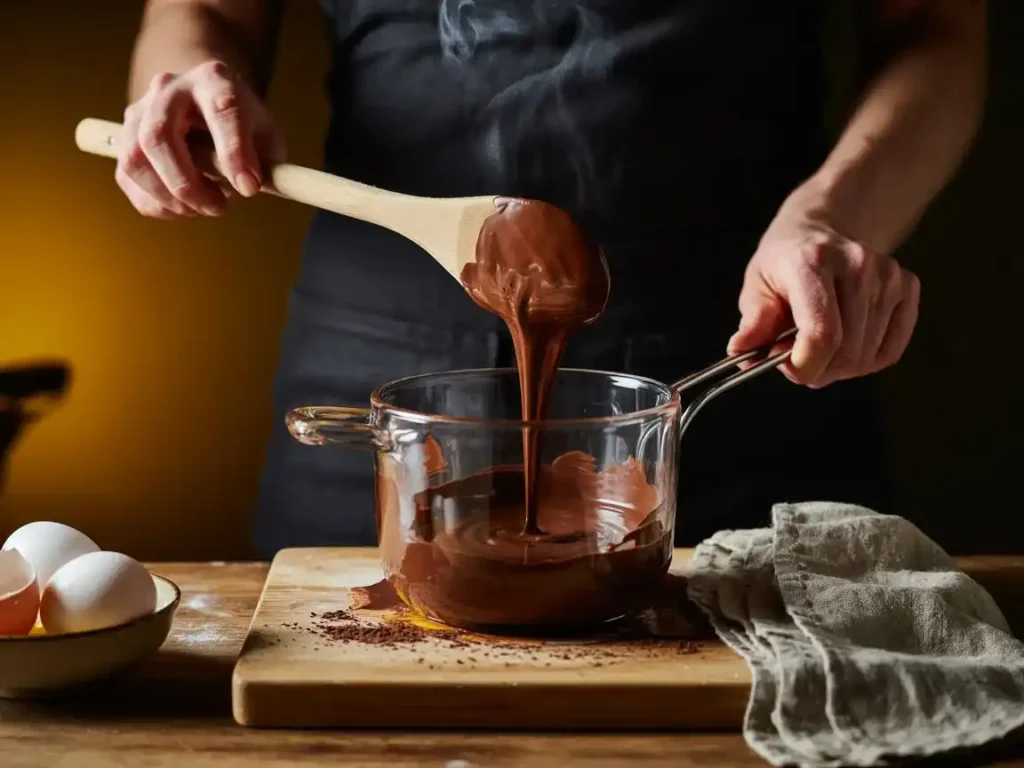
Why This Works: The Gap Logic
Most brownie recipes fail the center. They succeed at flavor but miss the texture because they add flour to create structure, milk for moisture, and baking powder for lift — and every one of those additions pulls the interior away from fudgy and toward cakey. The fat-to-flour ratio is the single most important variable in brownie texture, and a three-ingredient formula eliminates the variable entirely by removing flour from the equation. What remains is almost entirely fat, sugar, and protein. That combination does not bake into a cake crumb. It sets into a creamy, dense fudge that holds its shape only just — which is precisely what you want.
Ingredient Breakdown — Why Each One Is Non-Negotiable
The Chocolate (Minimum 70% Cacao): The cocoa butter inside high-percentage dark chocolate is what emulsifies the batter. When melted correctly and combined with eggs, the cocoa butter coats every sugar crystal and protein strand, creating a matrix that sets to a velvety, creamy interior. Milk chocolate contains too much added dairy fat and sugar to hold this structure — the center will never firm correctly. Do not substitute.
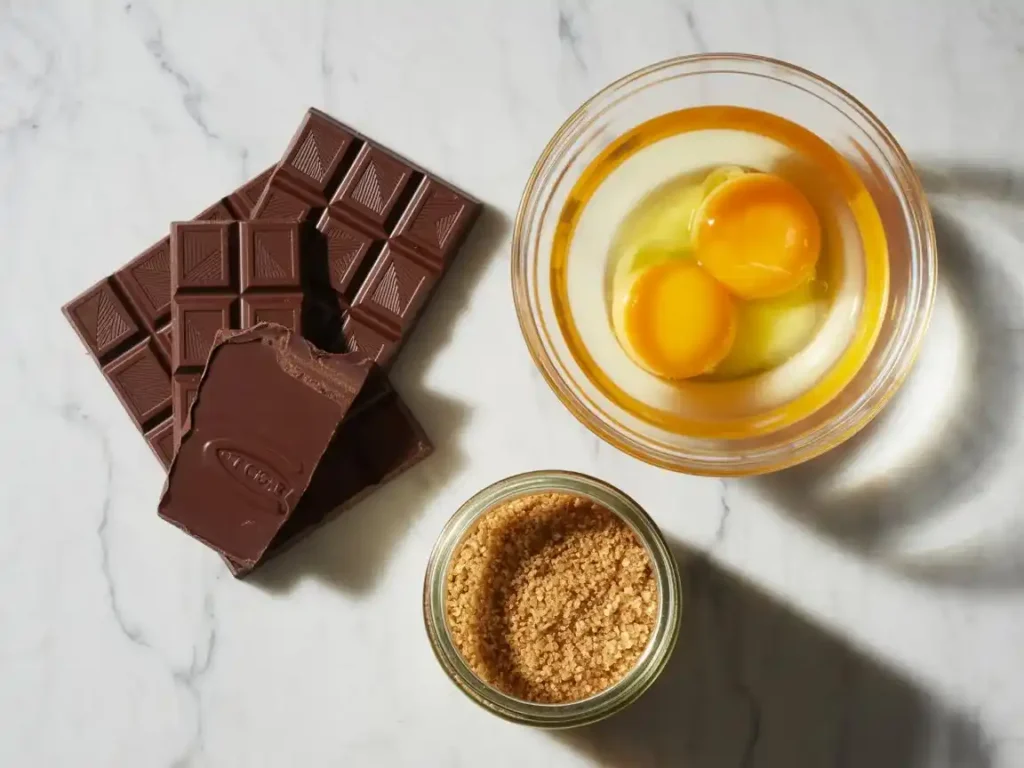
The Eggs: The yolk does most of the structural work here. Lecithin, the phospholipid present in egg yolk, is a natural emulsifier. It binds the water molecules from the sugar with the fat molecules from the chocolate, creating a batter that bakes into something closer to a ganache than a sponge. Two whole eggs produce the optimal balance of fat and protein for a creamy center. Three eggs will make the texture springier — technically competent, texturally disappointing.
The Sugar (Brown, Not White): Brown sugar contains residual molasses, which is hygroscopic — it draws and holds moisture from the atmosphere. This is the detail that keeps your brownies creamy on day three. White granulated sugar will produce a crispier overall texture with less moisture retention. If you want that creamy pull two days after baking, use brown sugar.
Step-by-Step Instructions
Step 1 — Melt the Chocolate Low and Slow Set a heatproof bowl over a saucepan of water held below 60°C — barely a simmer, no rolling boil. Break 200g of dark chocolate into even pieces and stir slowly with a rubber spatula as it melts. Pro-Tip: If the water temperature exceeds 60°C, the cocoa butter separates and the chocolate seizes into a grainy paste. You cannot recover seized chocolate. Keep the heat low and patient.
Step 2 — Fold the Eggs, Never Whisk Remove the bowl from heat and allow the chocolate to cool for three minutes exactly. Add 100g of brown sugar and stir until dissolved. Then add two room-temperature eggs and fold them in using a figure-eight motion with your spatula. Pro-Tip: Whisking incorporates too much air, which creates lift during baking and pushes the texture toward cakey. Folding keeps the batter dense, which protects the creamy fudge structure in the center.
Step 3 — Rest the Batter Allow the combined batter to rest uncovered at room temperature for five minutes before pouring into your pan. Pro-Tip: Resting lets the sugar fully dissolve into the warm fat, eliminating any gritty texture in the finished brownie.
Step 4 — Bake at 325°F (163°C) for 18–22 Minutes Line a light-colored metal 8×8 baking pan with parchment and pour in the batter. Bake at 325°F. At the 18-minute mark, check the edges — they should be set and pulling slightly from the sides. The center must still have a distinct jiggle when you gently move the pan. Pro-Tip: Forget the toothpick test entirely. A toothpick inserted into the center of a correctly-baked fudgy brownie will never come out clean. The jiggle is your cue, not the skewer.
Step 5 — Rest In-Pan for 45 Minutes Minimum Do not cut. Do not lift. Leave the pan on a wire rack for a full 45 minutes. The residual heat continues to slowly set the creamy center without over-drying it. Cutting too early collapses the fudge structure while it is still liquid — you will lose the pull entirely.
Texture Troubleshooting
| Result | Likely Cause | Fix |
|---|---|---|
| Too cakey | Eggs whisked, not folded | Fold with figure-eight motion |
| Edges too hard | Oven too hot or overbaked | Drop to 325°F, check at 18 min |
| Centre still raw | Batter too thick, under baked | Add 3 minutes, check jiggle |
| No glossy top | Sugar not fully dissolved | Rest batter 5 min before baking |
Storage for Maximum Creamy Shelf Life
Store at room temperature in an airtight container for up to four days. Refrigeration re-crystallizes the cocoa butter and sugar, which firms the center and strips the creamy texture you worked to achieve. If your kitchen runs warmer than 25°C, refrigerate briefly and bring slices back to room temperature for fifteen minutes before serving.
Nutritional Call-Out (Per Slice, Based on 12 Slices)
Approximately 148 calories | 9g fat | 16g sugar | 2g protein. Compared to a standard 12-ingredient bakery brownie averaging 290 calories per slice, this formula delivers the same creamy, fudgy satisfaction at roughly half the caloric weight — with zero refined additives.
Finished Dish
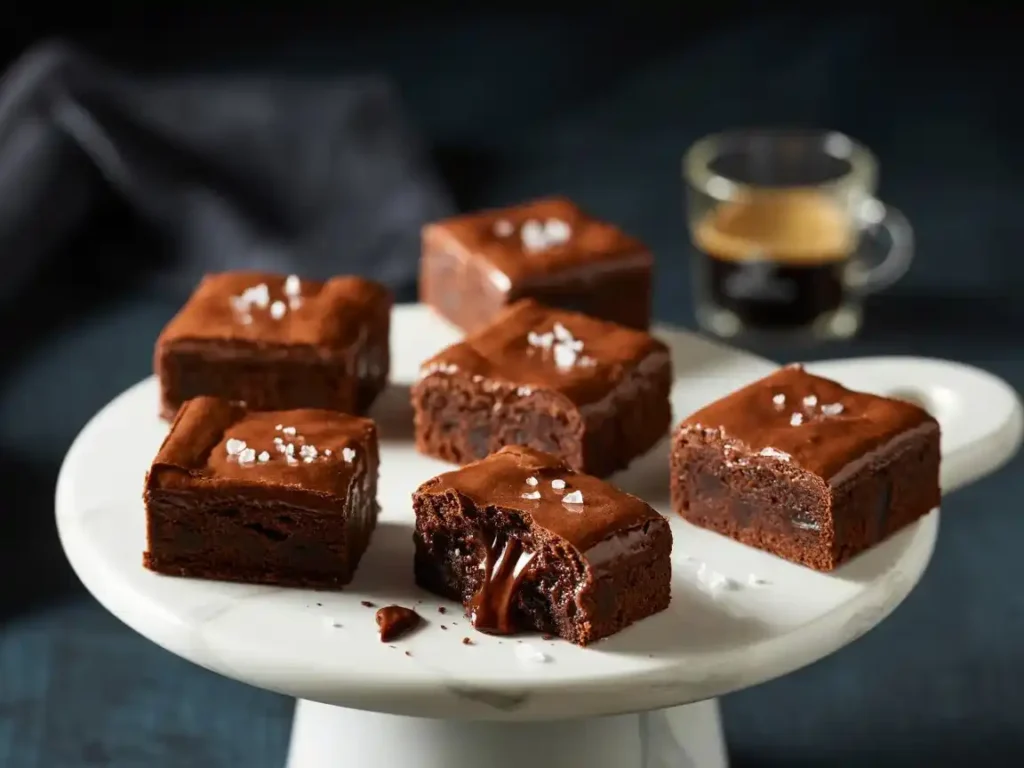
Which variation are you trying first — sea salt dark chocolate, espresso-spiked, or chilli-infused? Save this pin so you have the formula ready the next time someone asks which bakery you went to.


